
Trial, Error, Roll!
As a road cyclist of six years, if you’d told me two years ago that I’d be writing a love letter to gravel riding, I wouldn’t have believed you. I was in love with the road cycling culture and thrilled by fast, hectically competitive group rides. I also never imagined I’d be capable of long gravel rides after my diabetes diagnosis, let alone gravel racing, which all felt more demanding and unpredictable in terms of blood sugar management. Looking back now, my past self would be proud of how transformative gravel has been for my perception of what’s possible as a diabetic cyclist and how it’s led me to befriend many of my personal and health fears.
The idea for my gravel bike was born over the summer of 2024. The initial stages of brainstorming were magical. Working on this custom gravel build was very Charlie-and-The-Chocolate-Factory-esque: I was Charlie and Alder Threlkeld from Rodriguez Bicycles was Willy Wonka. It started as, “What if we went with a carbon racing frame—something to appeal to your roadie side—and added Arabic decals?” It eventually turned into, “What if we made it pink? Added red flames? Can we add a Lebanese flag? Maybe an obscure diabetes decal?” The answer was yes, yes, and yes.
From a brief experience gravel riding in Walla Walla, WA on a borrowed bike a few years ago, I knew that bumpy terrain could mean excruciating pain in my arms. My continuous glucose monitor (CGM) needle was wiggling and scratching my muscles, and my insulin pump injection site became sore. Making this build diabetes-friendly quickly became a central objective. A Redshift suspension stem and seat post immediately came to mind, and they’ve since become my favorite parts of this bike because, in a way, they’ve facilitated gravel riding for me. Most days, I feel no arm pain regardless of the terrain, and even on the worst of terrains, the pain is tolerable because it’s minimal and temporary.
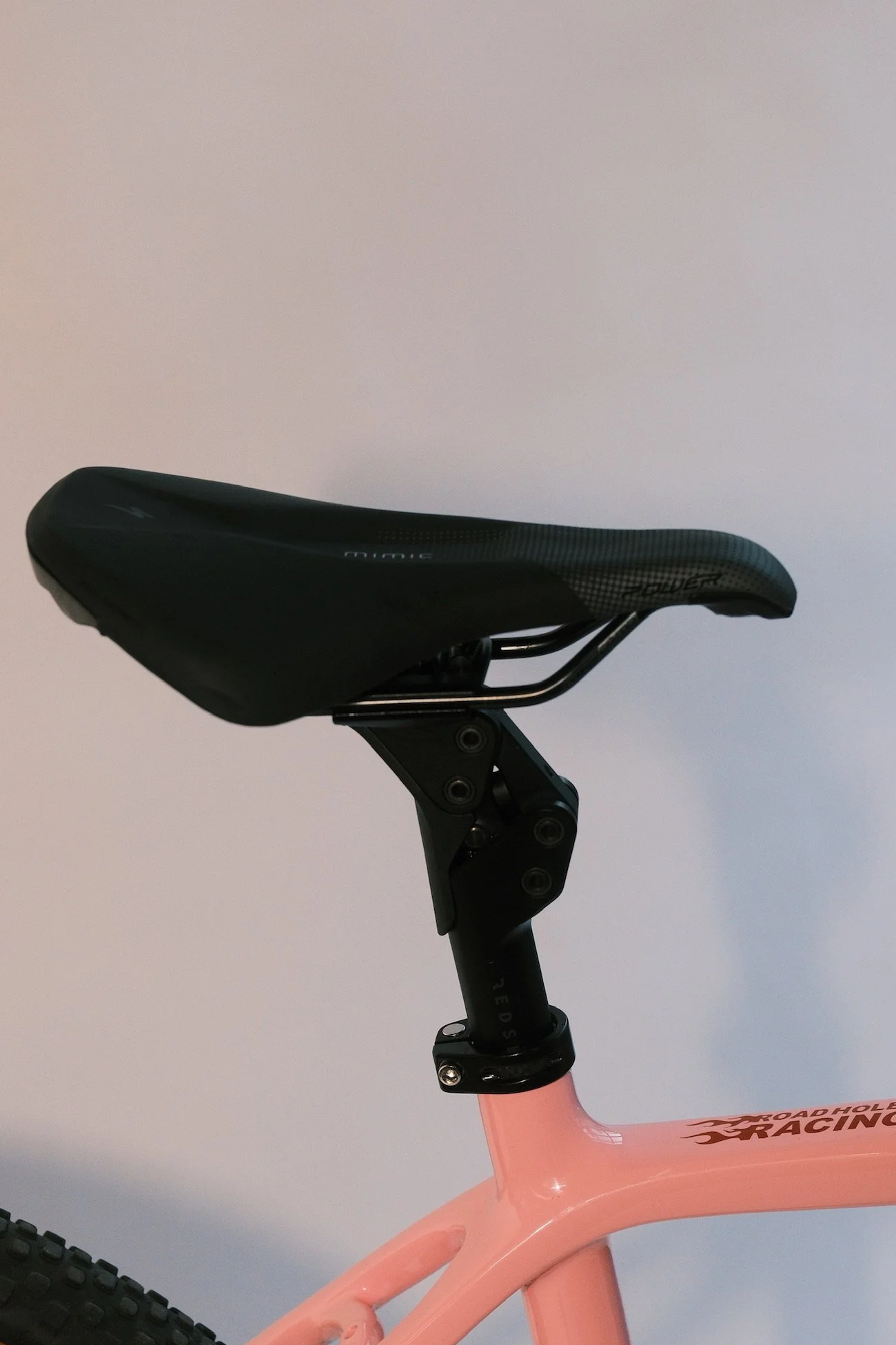
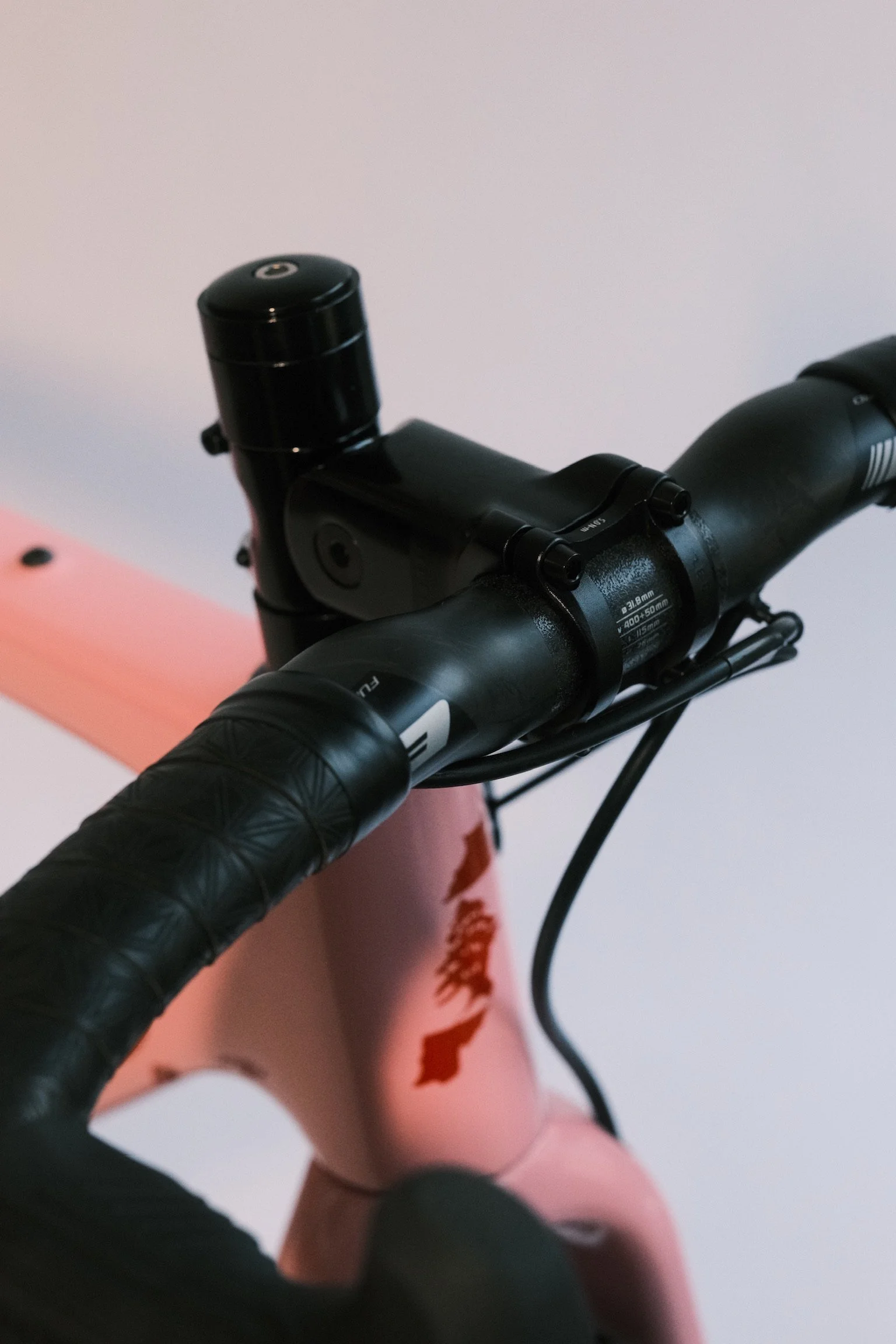
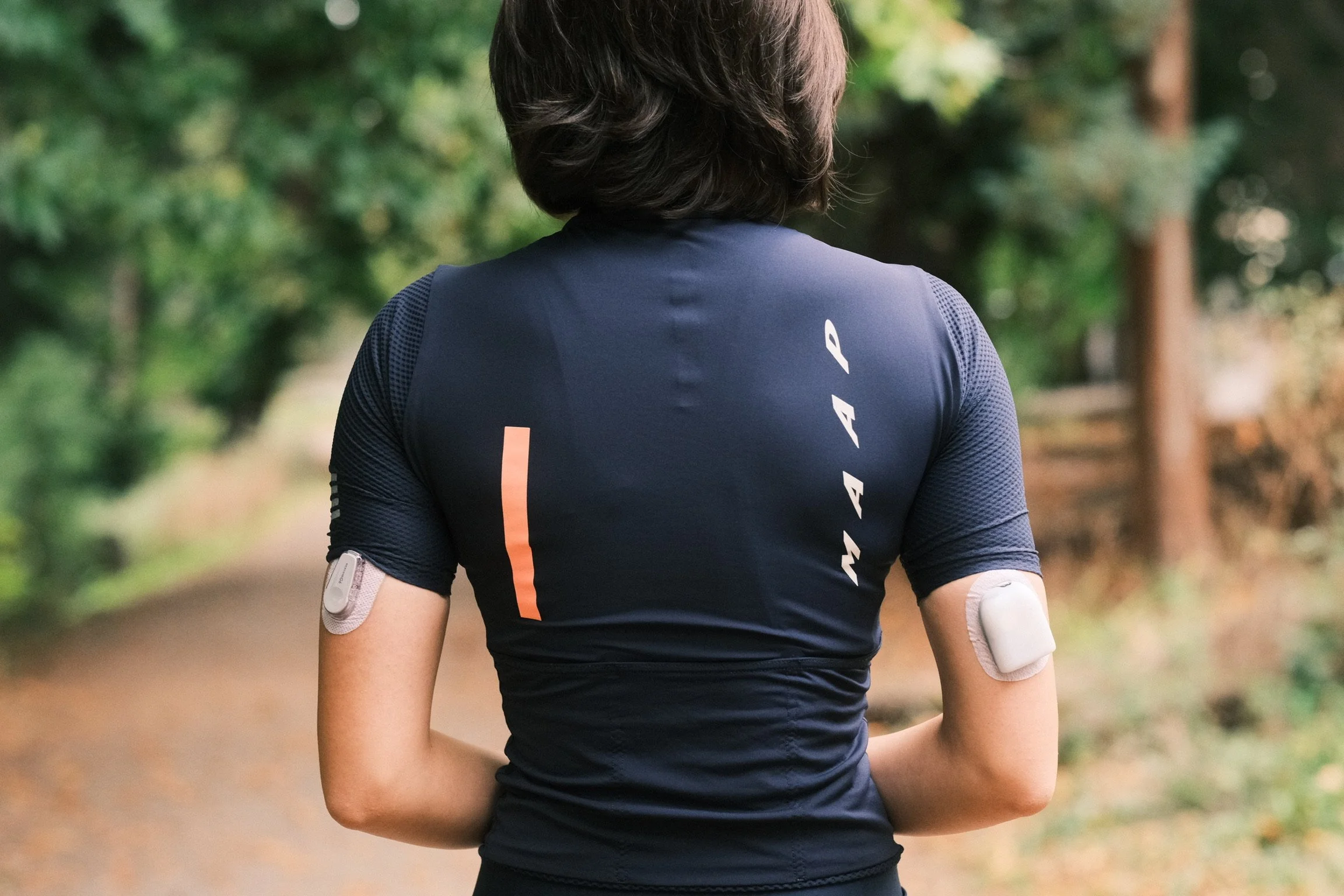
Photos by Connor Azzarello
Choosing a frame required extensive research, complicated by my height (just 5’3”). Many carbon XXS frames had top tubes that were too long, leaving little room for the Redshift suspension stem. We eventually landed on a Bolt Cutter, the only true XS at 50cm, and ordered it R2P with a primer finish, a perfect blank canvas for the custom paint job we had in mind.
Component choices were quick and easy. Alder knew he wanted three things for this bike: to keep it “roadie, racey, and baller,” make it comfortable, and make it look good. That meant carbon FSA AGX K-Wing gravel bars, Shimano GRX 2x11 Di2, Absolute Black chainrings, and Light Bicycle WR35 Falcon Pro rims—components that “looked fast standing still.” I loved this setup so much that ten months later we built a road wheelset with Light Bicycle’s Turbo 50 rims, turning this build into my road bike as well.
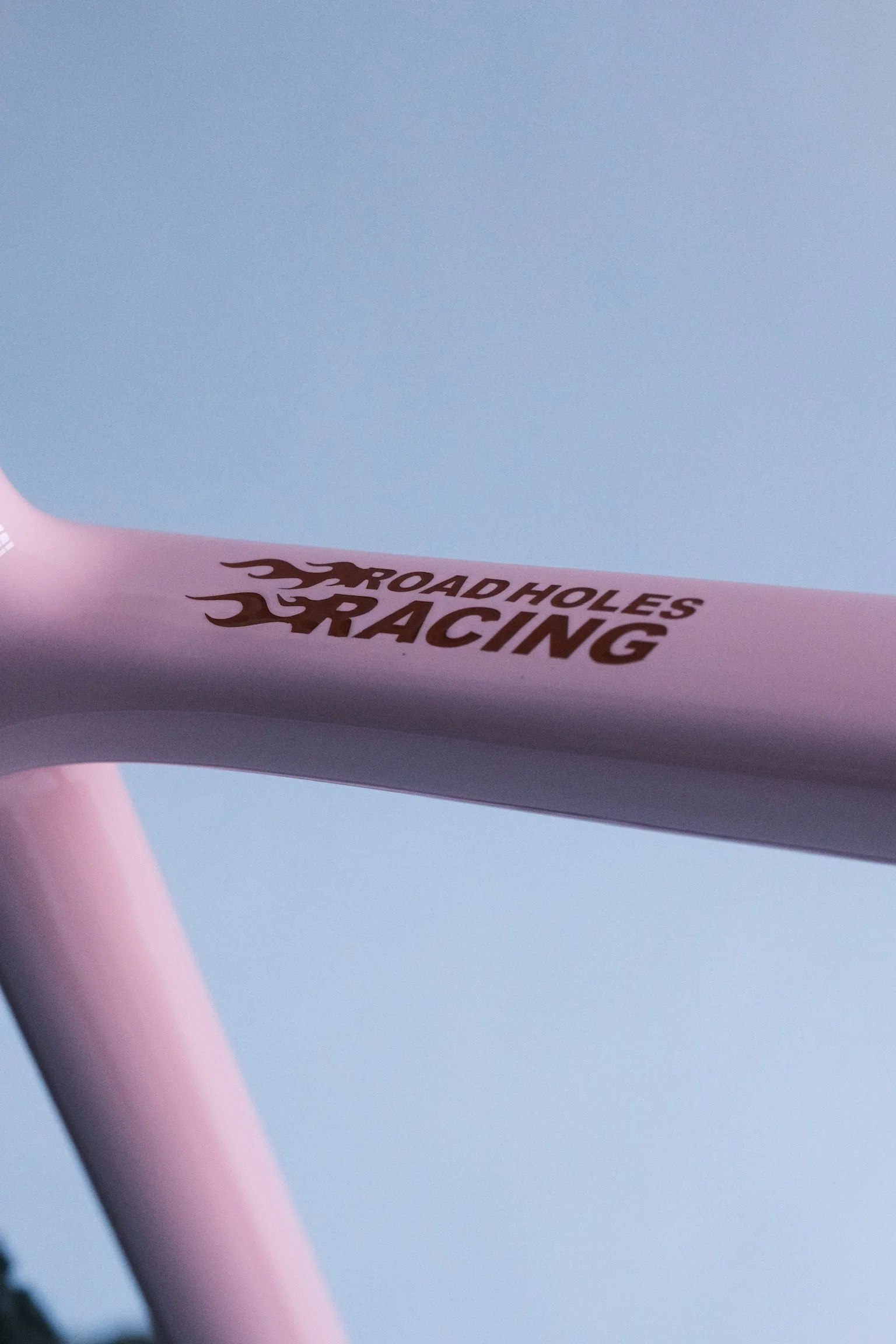
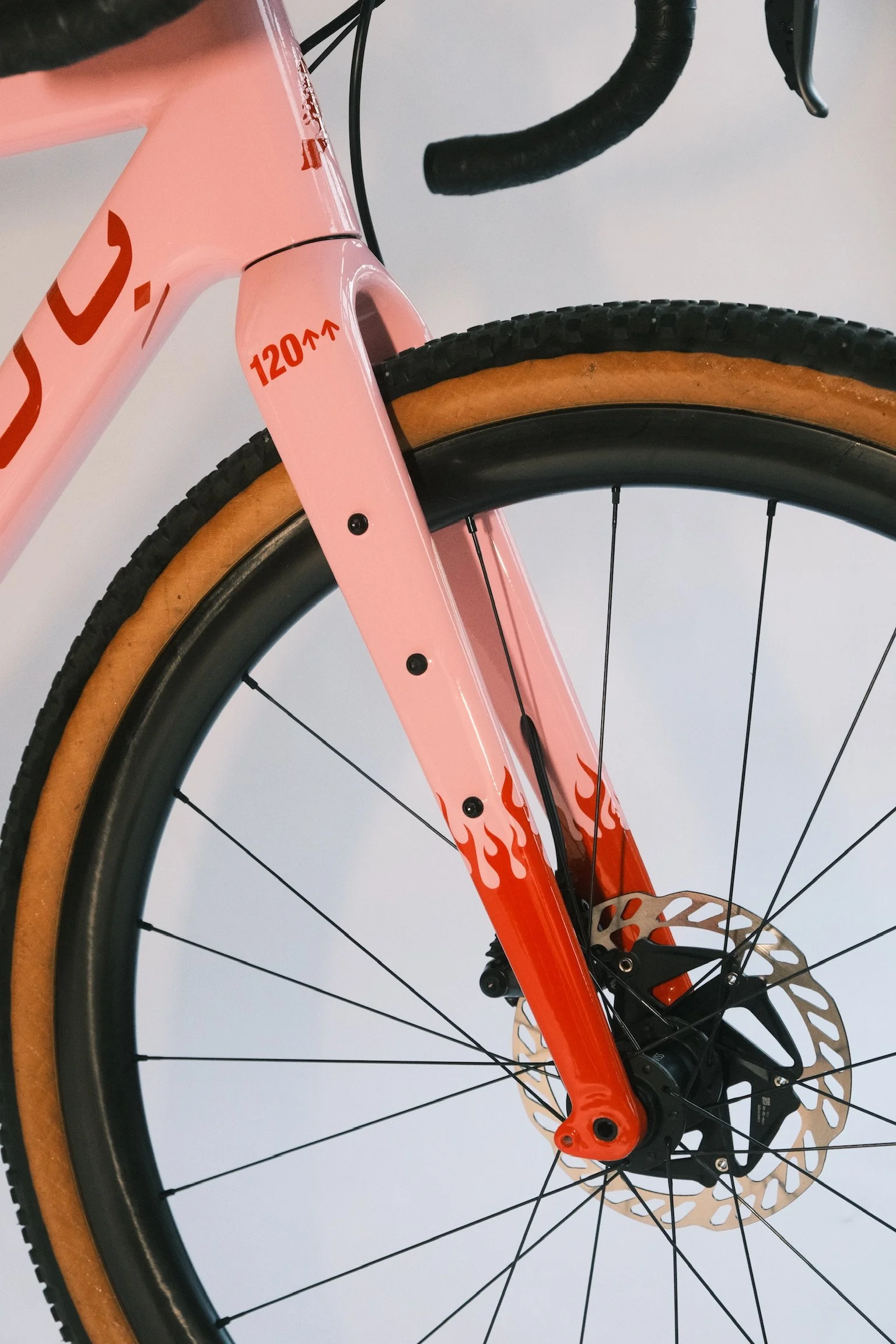
The paint job and decals took the most time. This was my first opportunity to customize a build, so I wanted to create something I loved and wanted to show off. I own a Rose road bike, and inspiration came in June of 2024 from a Rose-sponsored rider’s custom bike that was pink and had red flames on the fork—need I say more? Teresa McNutt at Rodriguez is a paint magician, and in her lair (the sweltering ground floor of Rod Bikes), she conjured the perfect shades of pink and red I’d imagined.
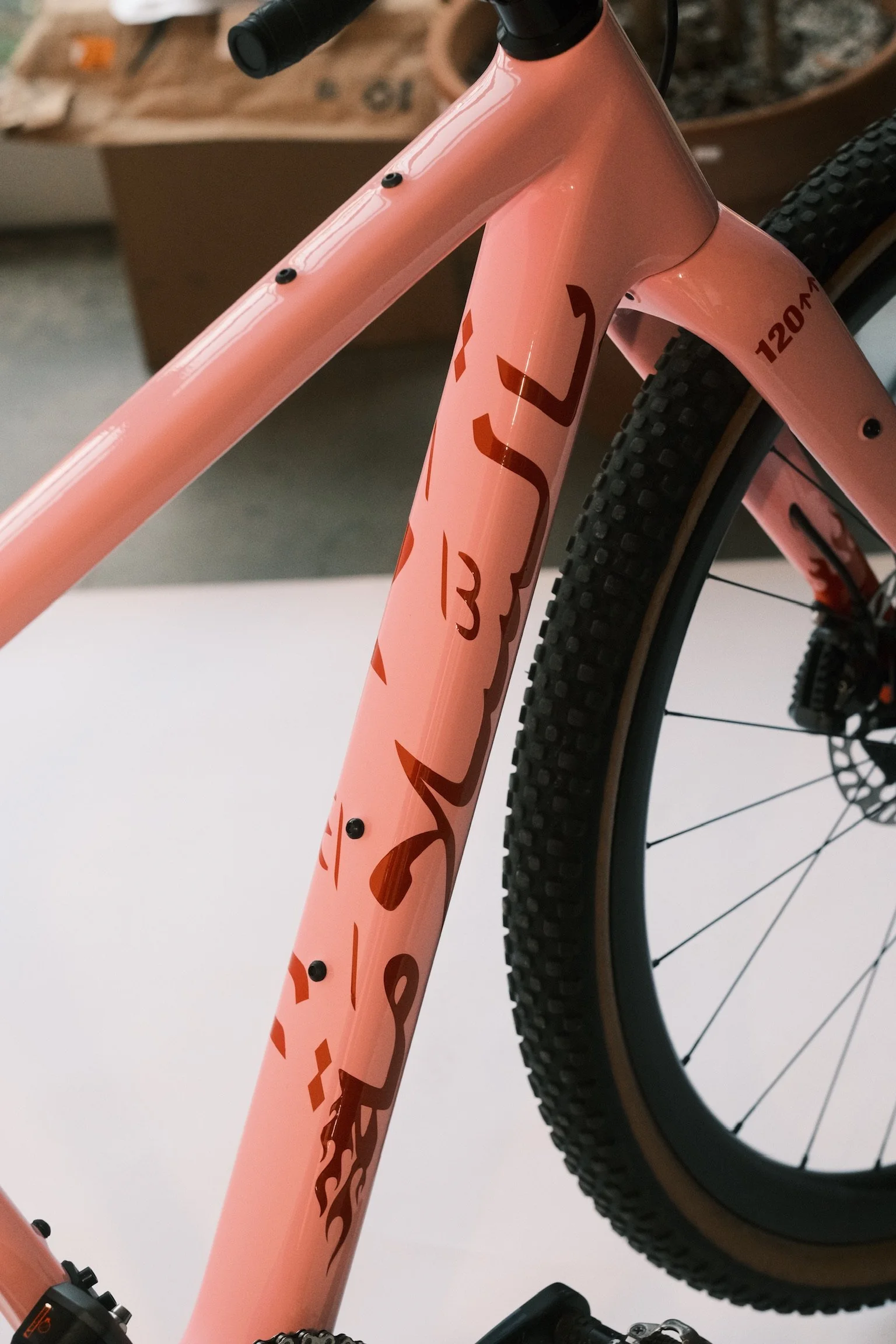
For the down tube decal, I consulted some Arab friends, drew inspiration from my favorite Arab artists, and considered names of streets in Beirut that hold meaning for me. Weeks of brainstorming eventually led my dad to suggesting one word: “Bi’ssalamah” (“Bi’ssalemeh” in the Lebanese dialect). It’s a word you say when someone is departing—whether they’re leaving for a short trip and you’re seeing them later or going on a long journey. It carries a simple, profound wish: may you travel with peace, may you arrive safely. For a bike destined for long gravel rides, bikepacking trips, and races, “Bi’ssalamah” felt very fitting, a quiet reminder of care, connection, and safe passage every time I ride.
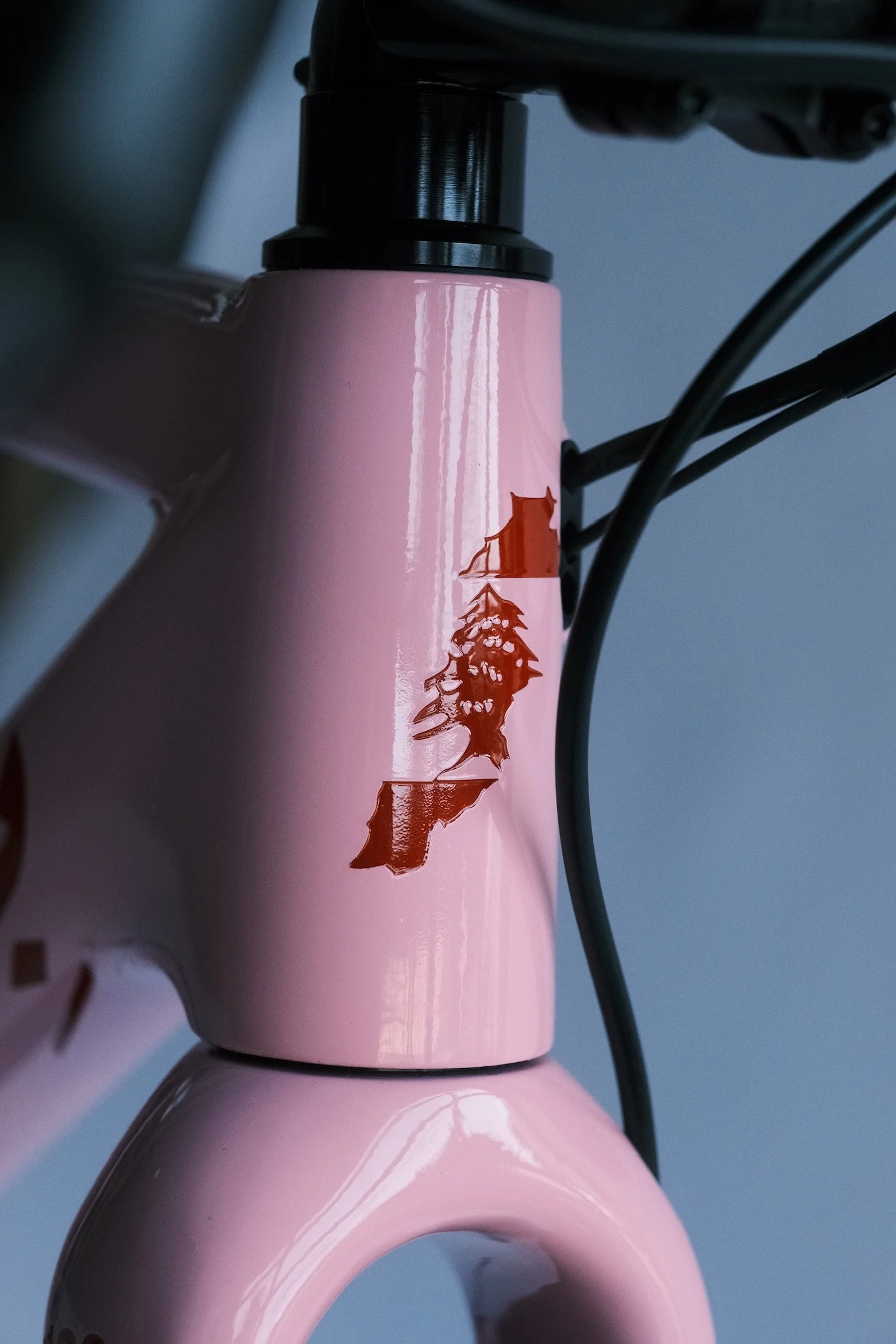
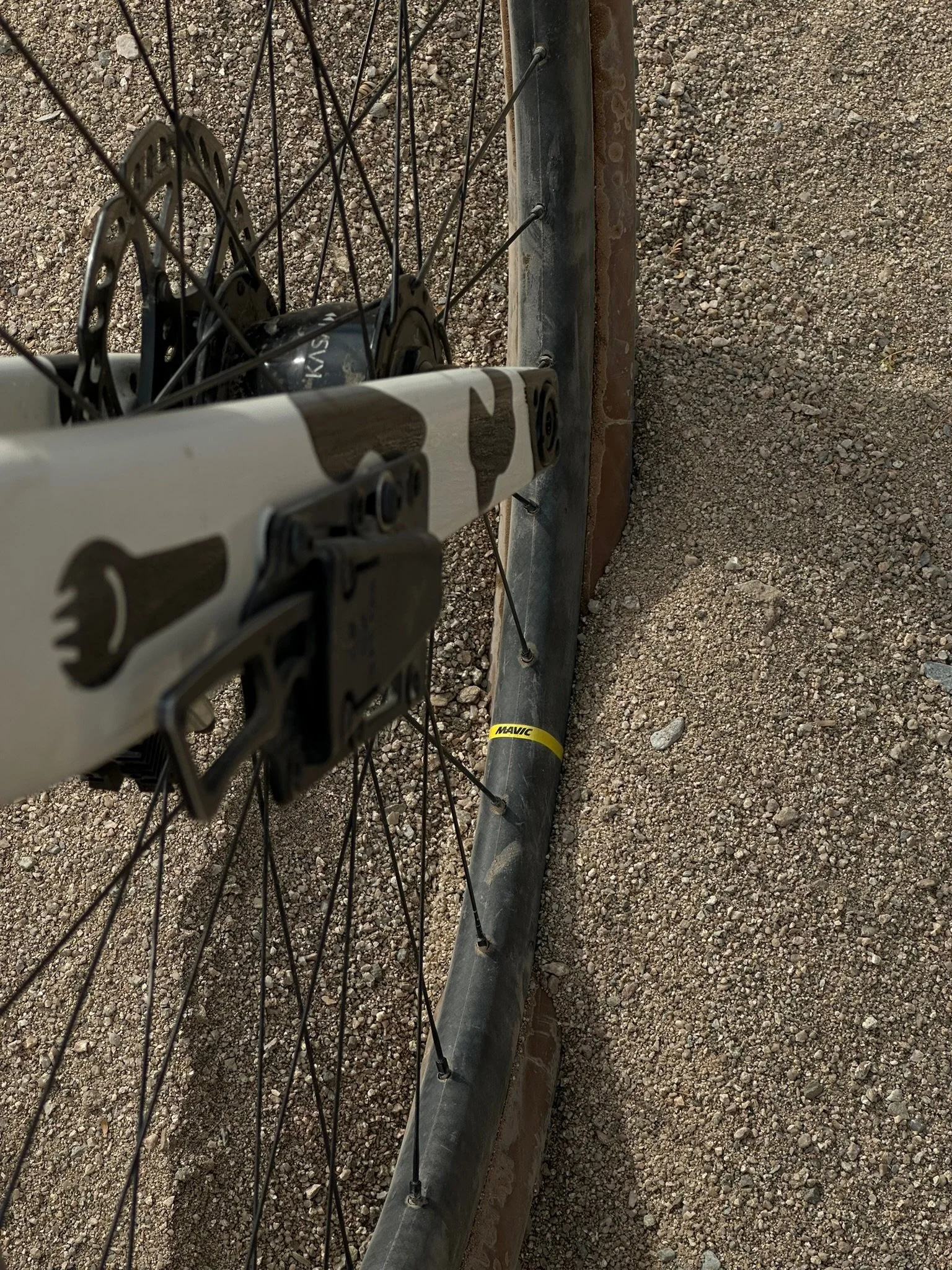
Positioning the letters and diacritics was no small feat. Arabic letters shift shape and connect to one another to form words, a delicate puzzle that had to be done manually on Sure Cuts A Lot. After hours of collaborating and some Arabic lessons, Alder masterfully created and laid the bottom tube decal, which was the star of the show. We added a few more touches: the head tube decal, which is the Lebanese flag overlaying the Lebanese map—a quiet tribute to my homeland and memories of riding along the Mediterranean; another diabetes inside-joke decal; and a handful of flames (not quite enough). The pink was painted on top of the red, and just like that, the frame was born. It felt like a living portrait of my identity, past and current, and a manifestation of the dreams I hoped to accomplish on the bike.
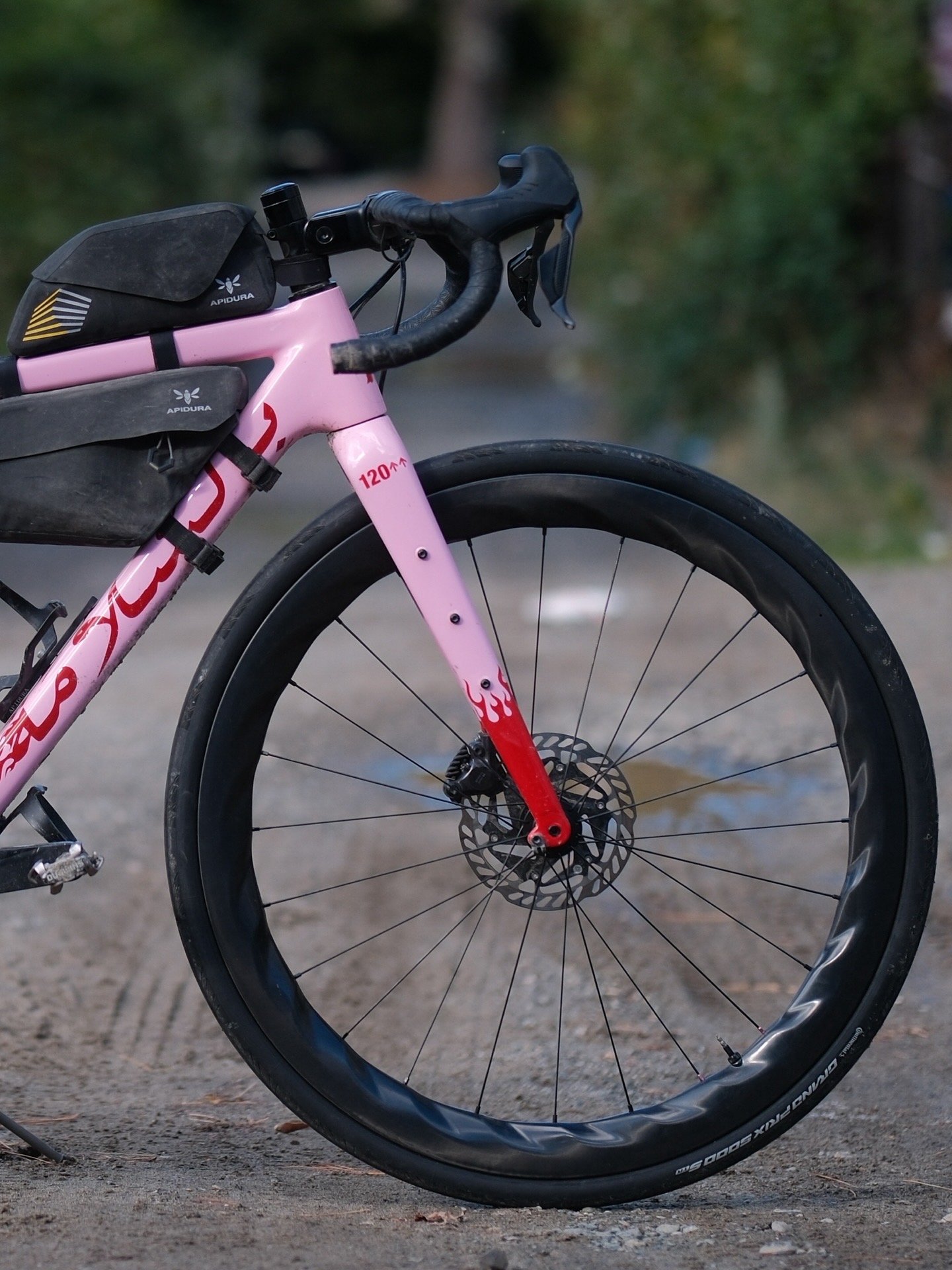
Both the bike and I made our gravel debut in Tucson, Arizona in February of 2025. I tried to approach gravel riding with a mindset of learning things as they came, which is an exceptionally difficult challenge when you live with diabetes. You get in the habit of preparing for the unknown, because you can do everything right and still have no control. I can eat the same meal and take the same amount of insulin, or ride the same route with the same blood sugar management plan, and still end up low or high.
But if I wanted to race gravel in the summer and actualize my daydreams of long gravel adventures, there was no room for what ifs. Some were ridiculous—what if I’m unteachable and bad at gravel? Others were more warranted: what if blood sugar management is impossible? What if my blood sugar drops and doesn’t stabilize on a remote gravel road?
This sparked some of the most meaningful lessons gravel riding, and later racing, has taught me: my fears don’t dictate reality; I will crash if I obsessively worry about crashing; I can’t and shouldn’t try to predict every negative outcome; I can’t feel guilt over what I couldn’t have foreseen; and I will make it back to the car. I don’t need total control, I need to earnestly set myself up for success.
So, in preparation for Arizona and its heat, I packed my weight in nutrition I knew worked reliably for my blood sugar (Carbs Fuel gels and carb mixes). Apidura also generously set me up with their Racing Series bags, which I filled with enough spare insulin and pump parts to feel safe as I navigated gravel for the first time. And with my coach’s words echoing in his Slovakian accent, I decided to “fucking send it.”
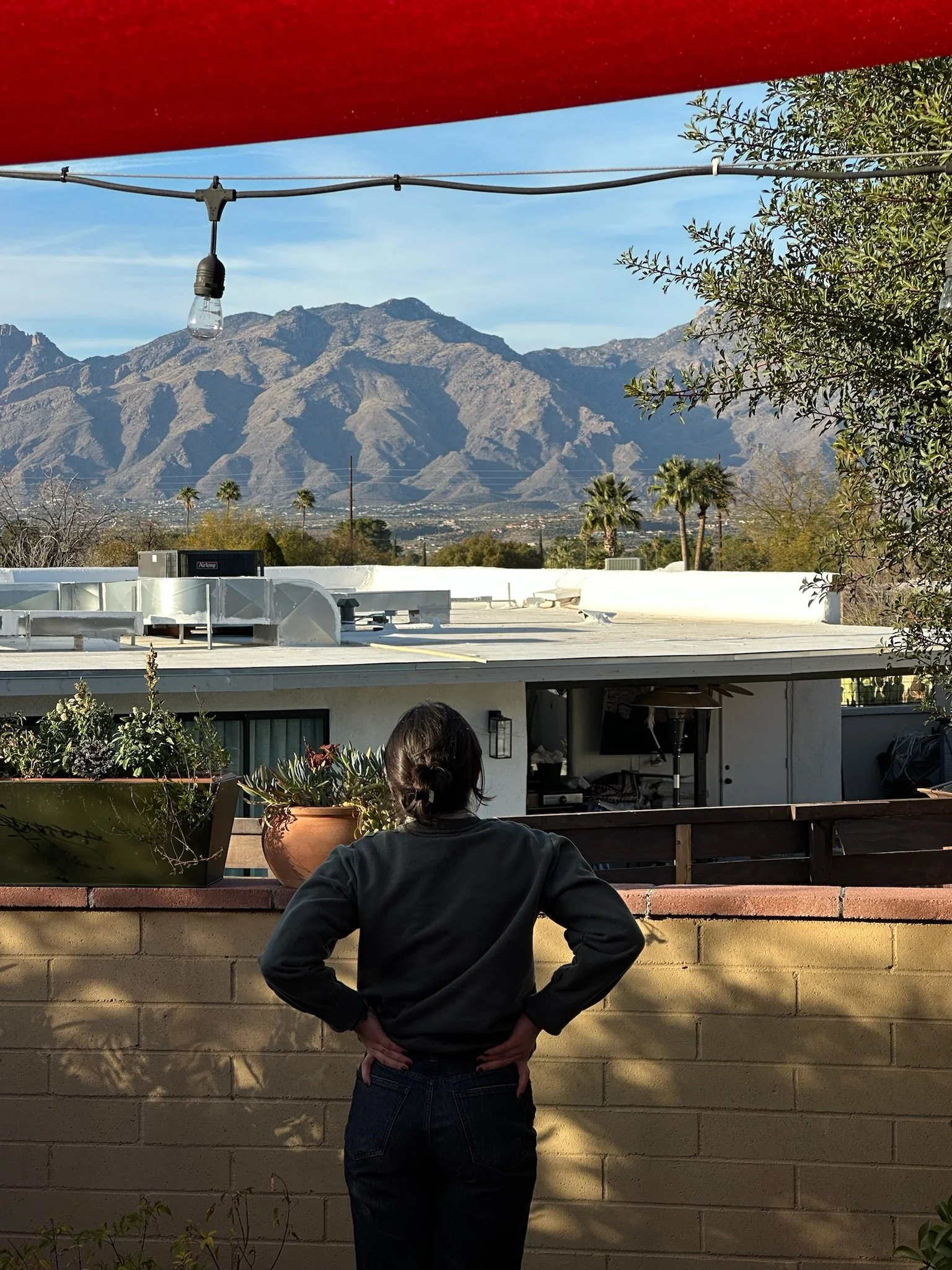
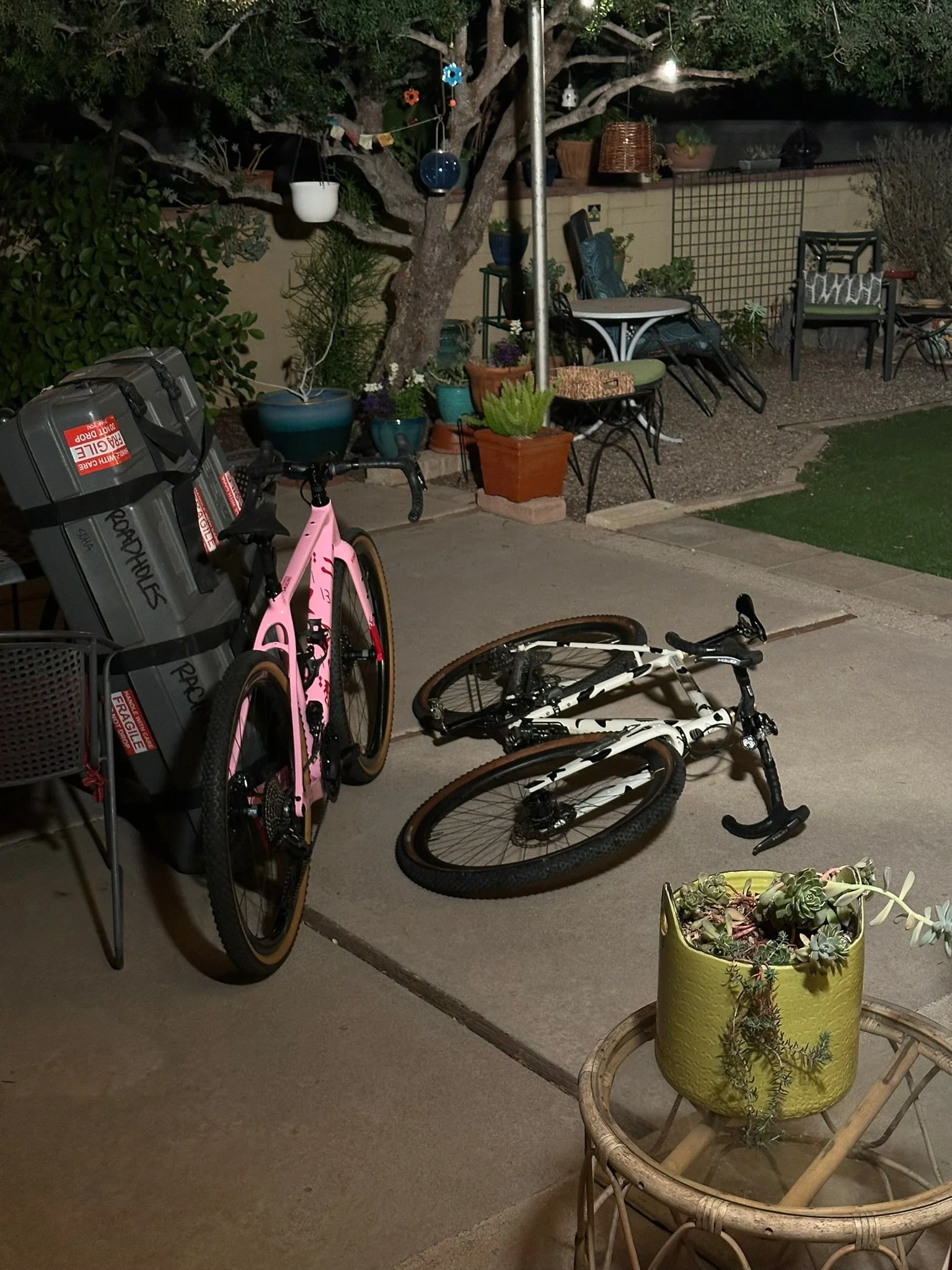
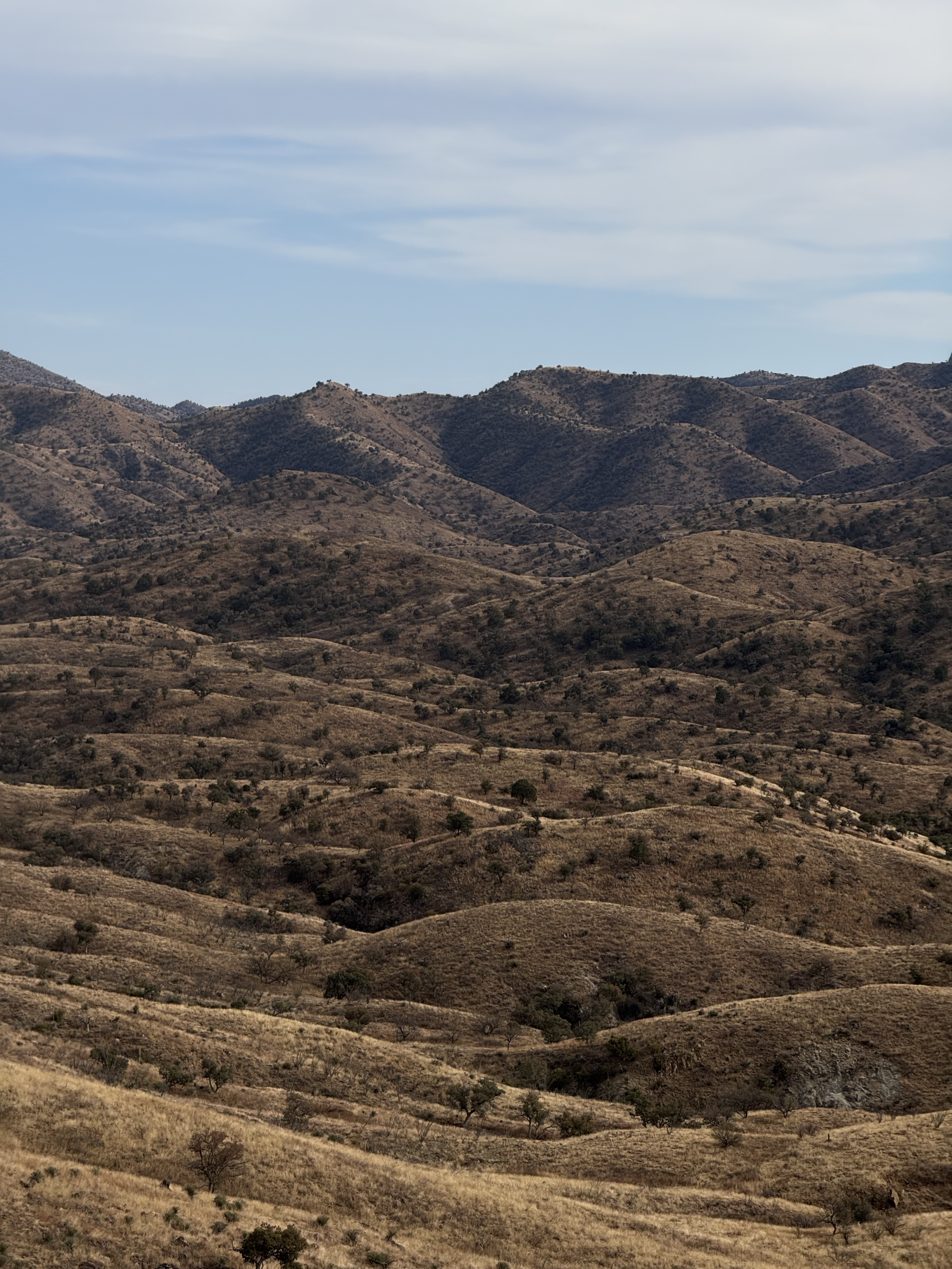
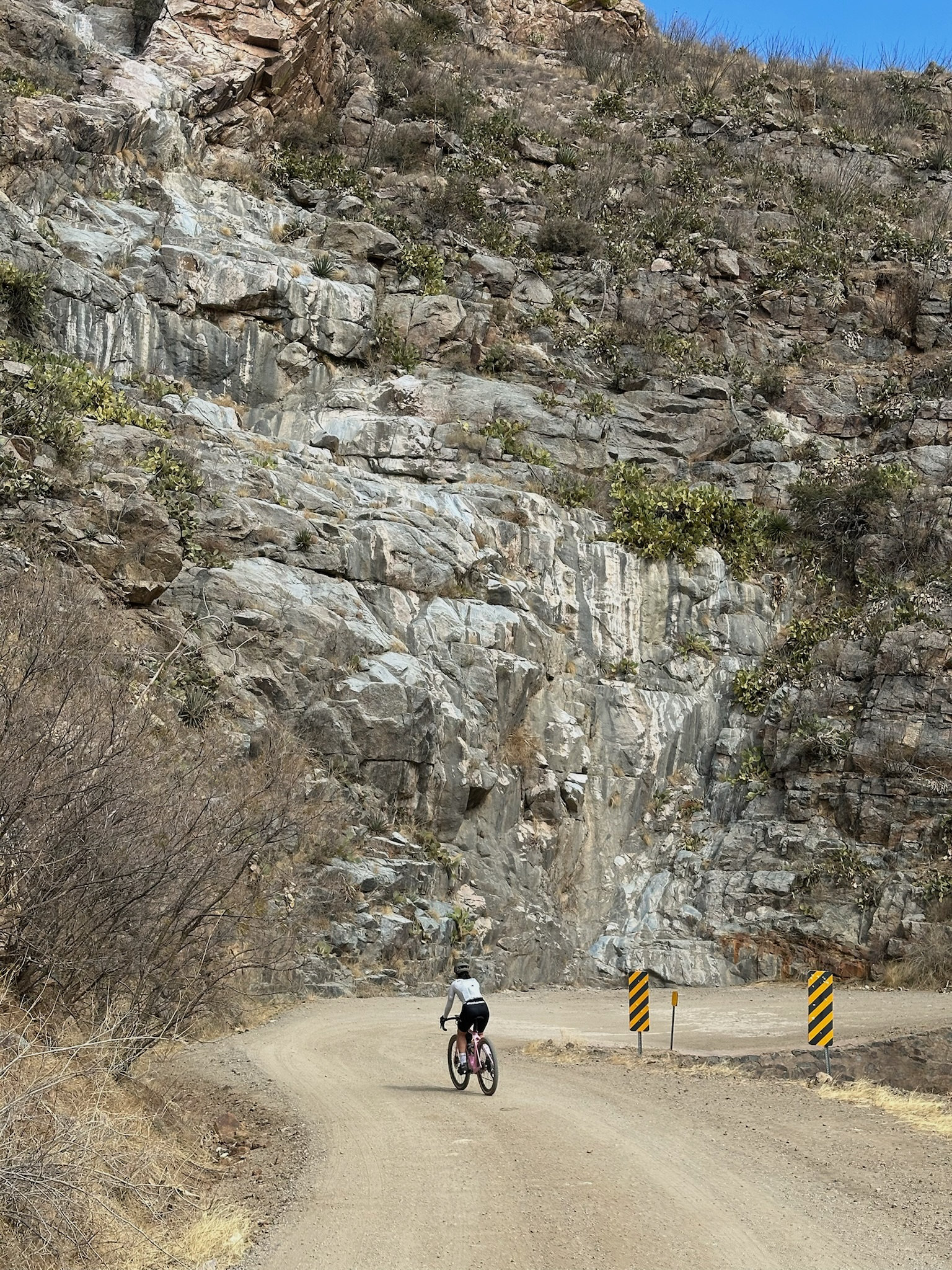
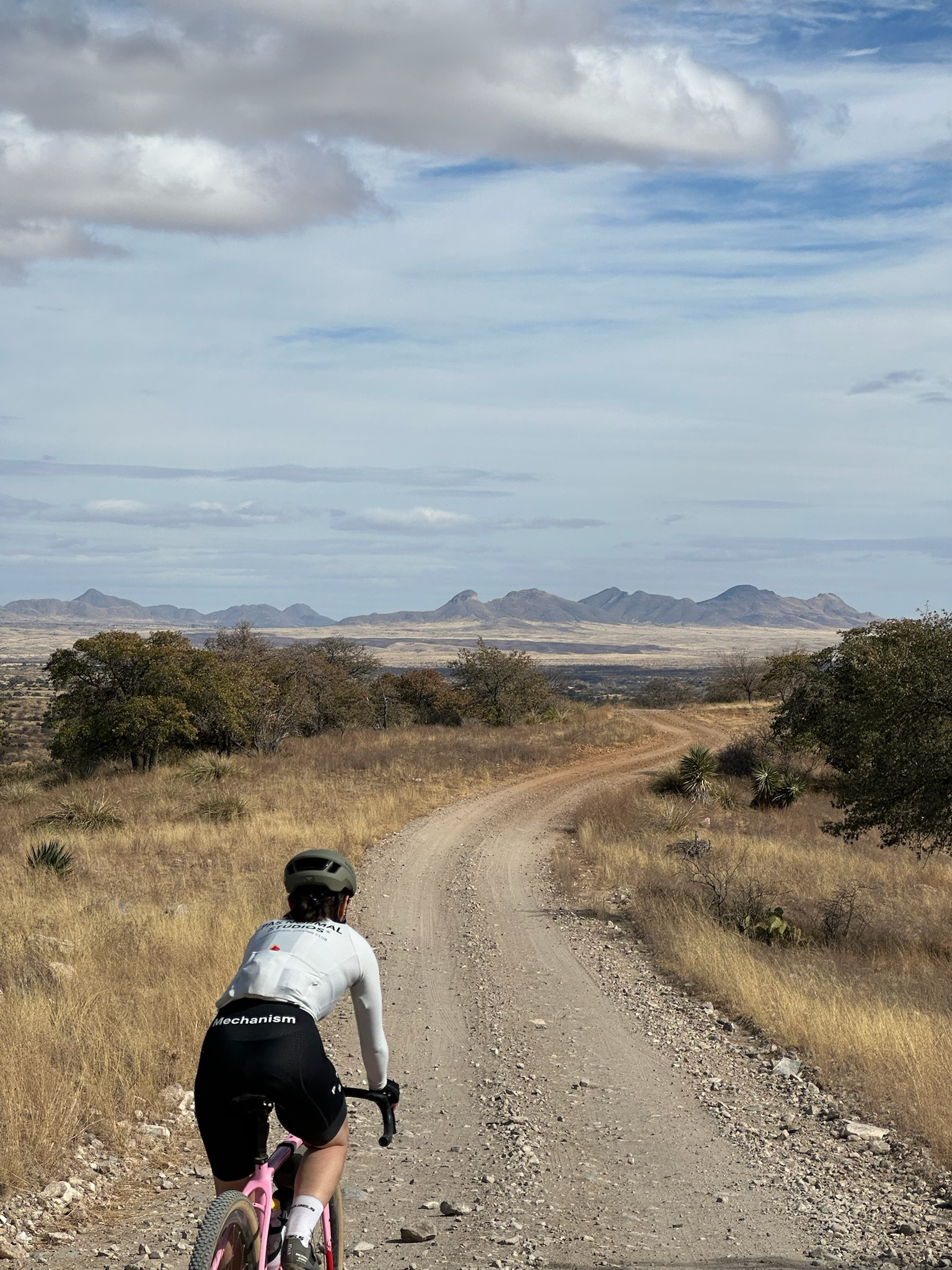
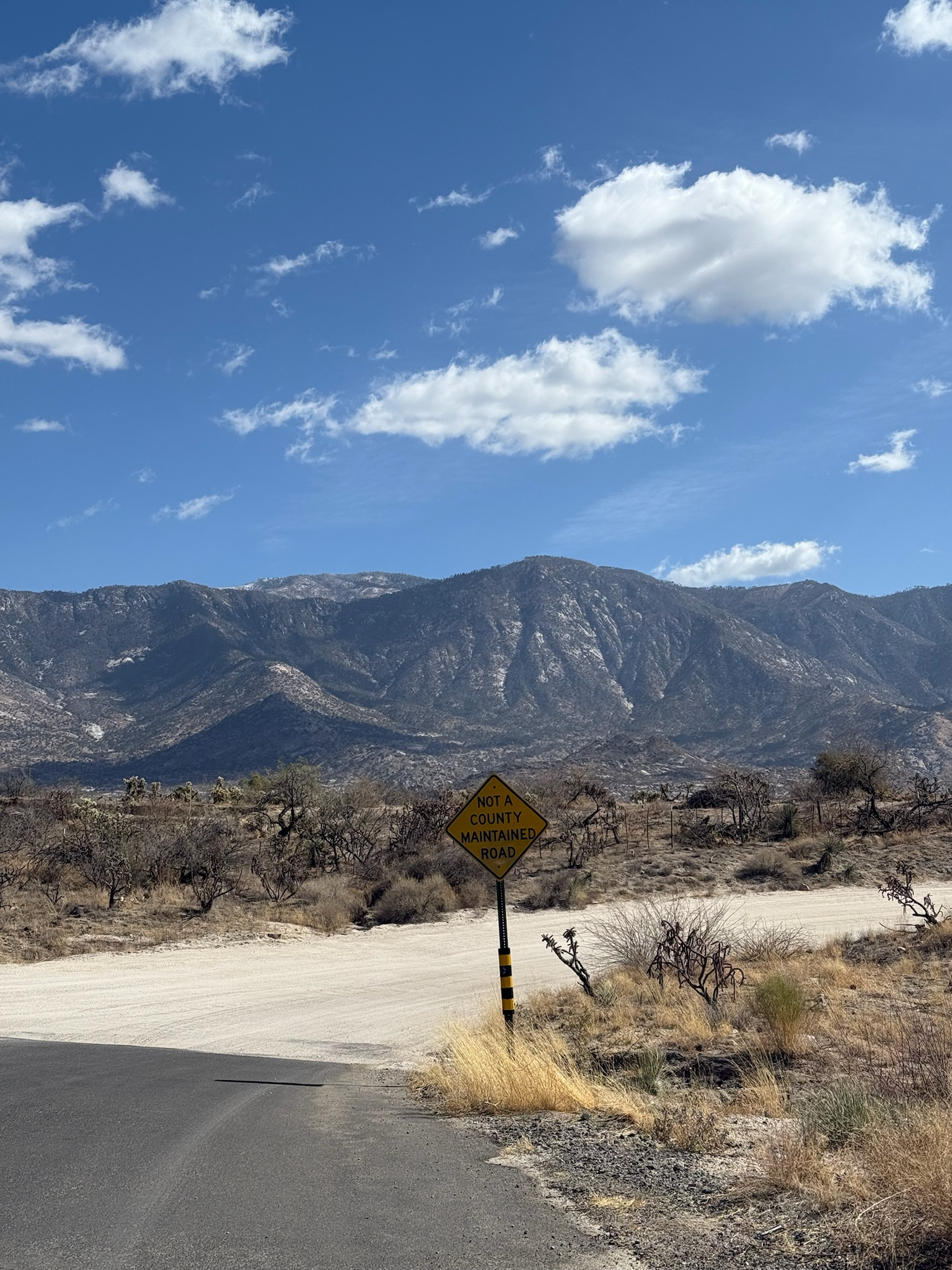
Admittedly, day one in Arizona was a shock to the system. Fifteen-mile-1,778-foot-long story short, this ride in Ruby became my regrettable introduction to deep washboard and altitude sickness. I was thrilled to finally ride my bike, the first pedal strokes on the Pajarita Wilderness’s sun-baked gravel were exhilarating, the views spectacular, and the warmth of the sun a welcome contrast to Seattle winter.
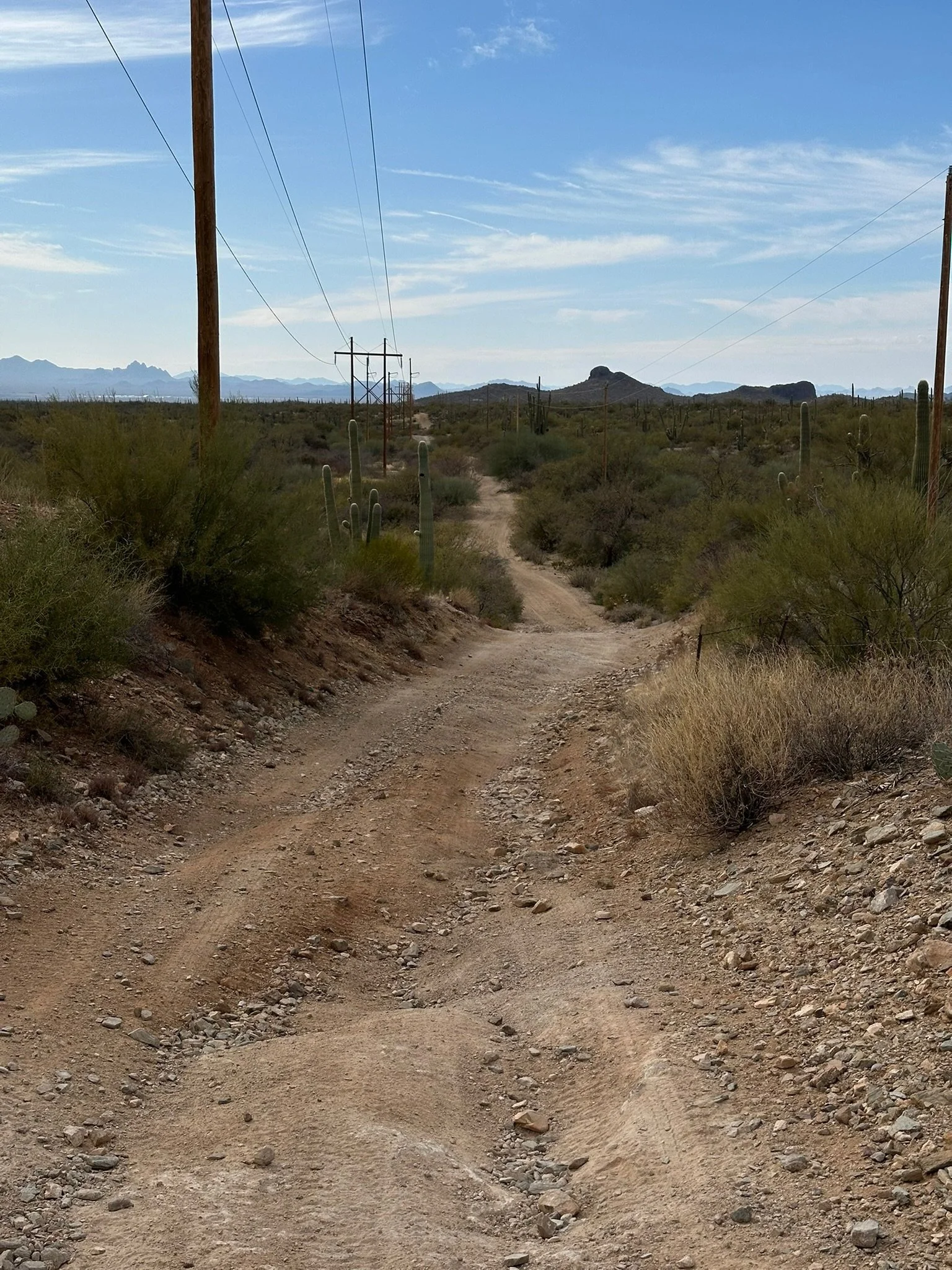
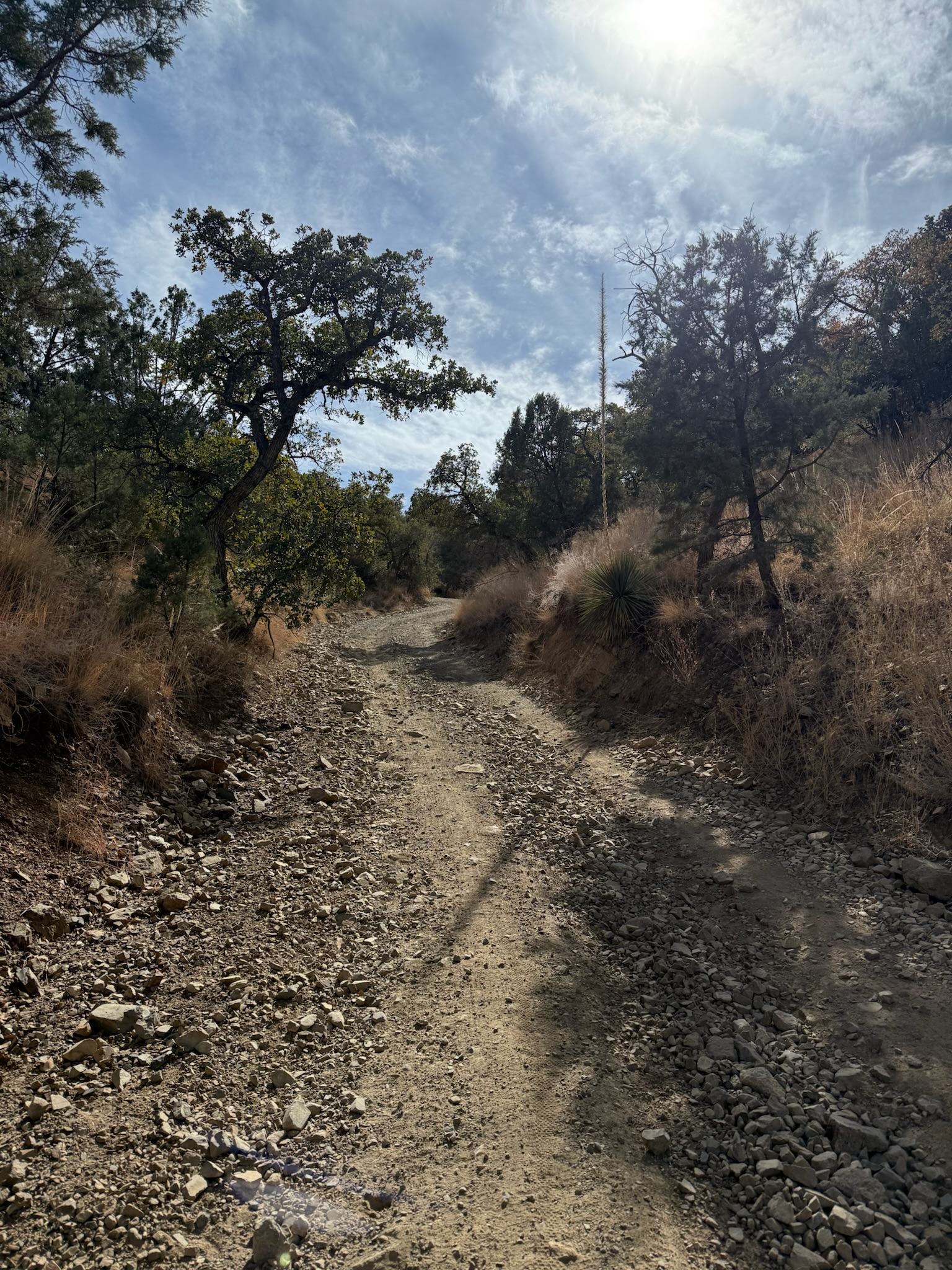
But the washboard only grew wider and deeper, the rocks chunkier, and the gravel looser as the climb went on. After hyping myself up for so long, it felt like my what ifs were coming to life. I struggled to brave the terrain, my blood sugar dropped twice, and I hadn’t anticipated altitude sickness. On the washboarded descent, the aggressive knurling on my brand new brake hoods chewed into my palms until they were raw. I felt like I was failing.
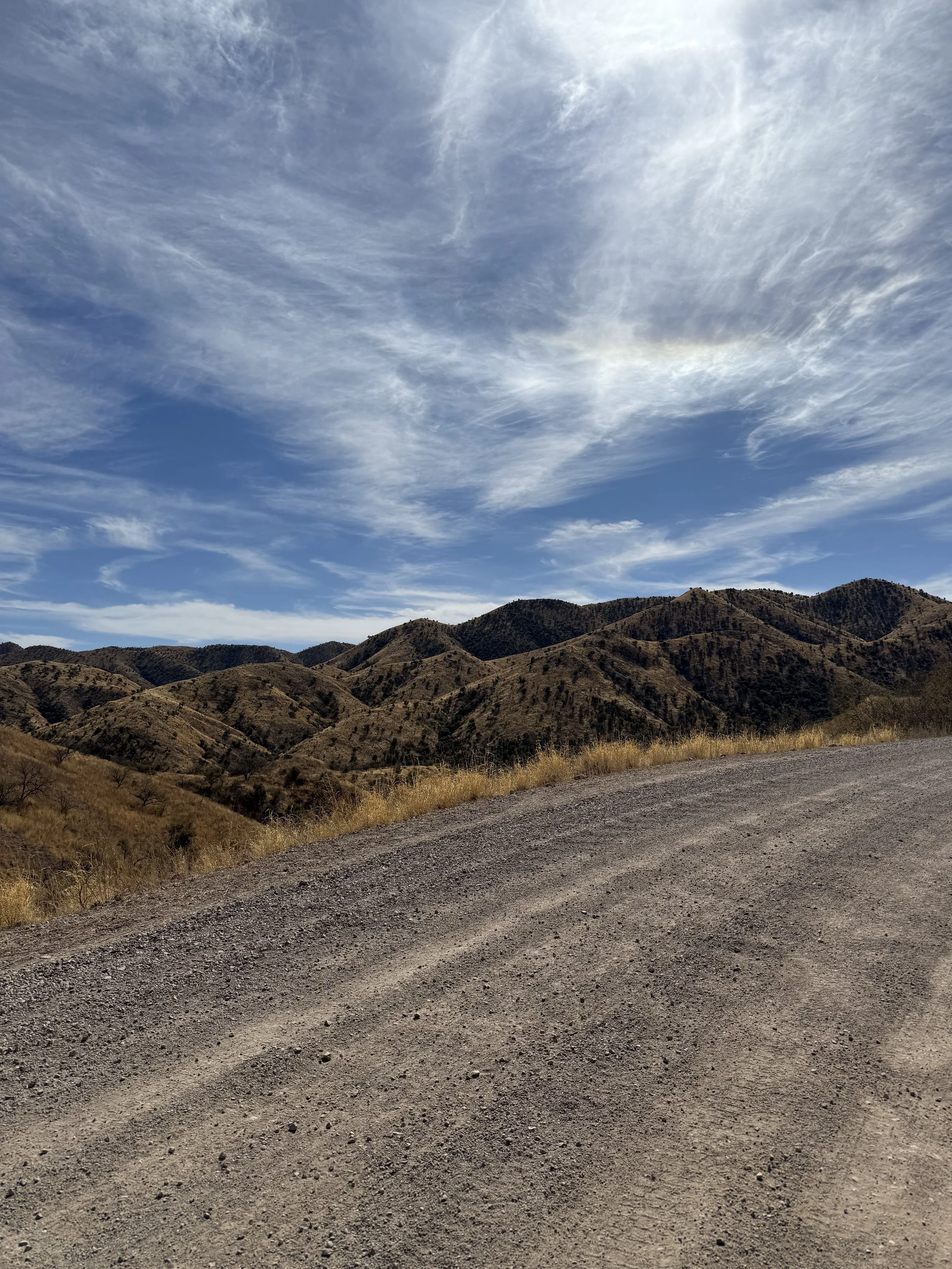
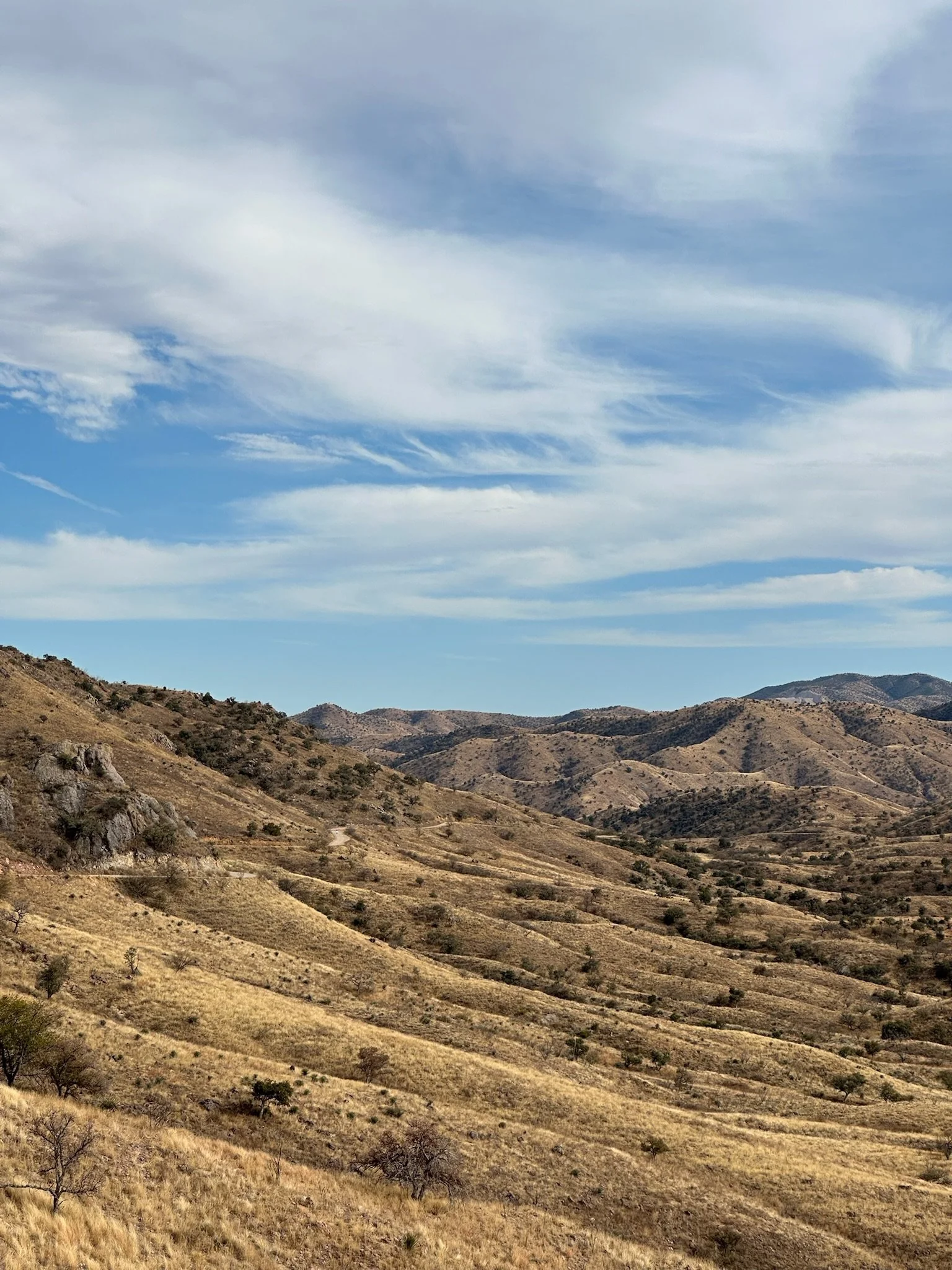
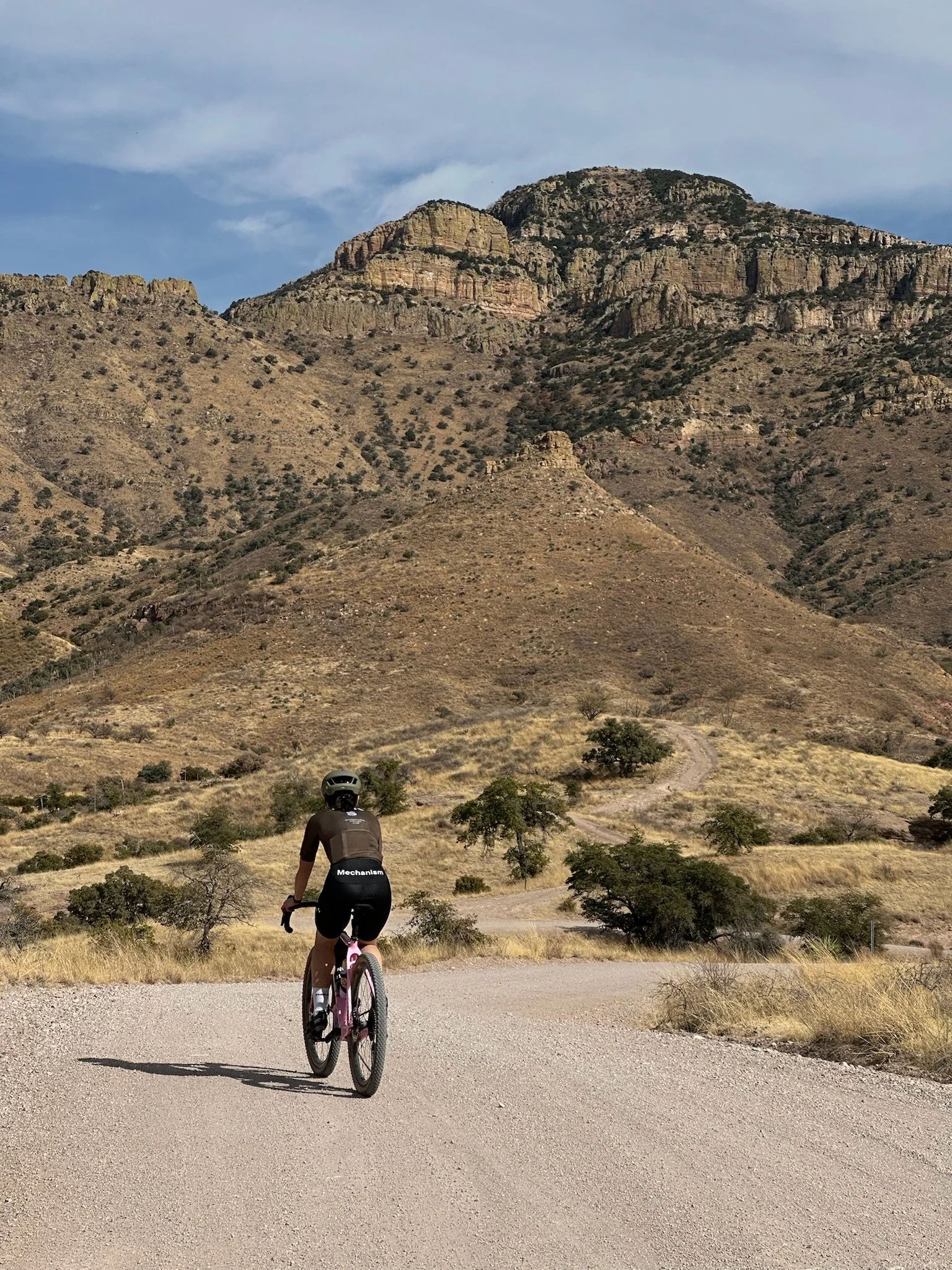
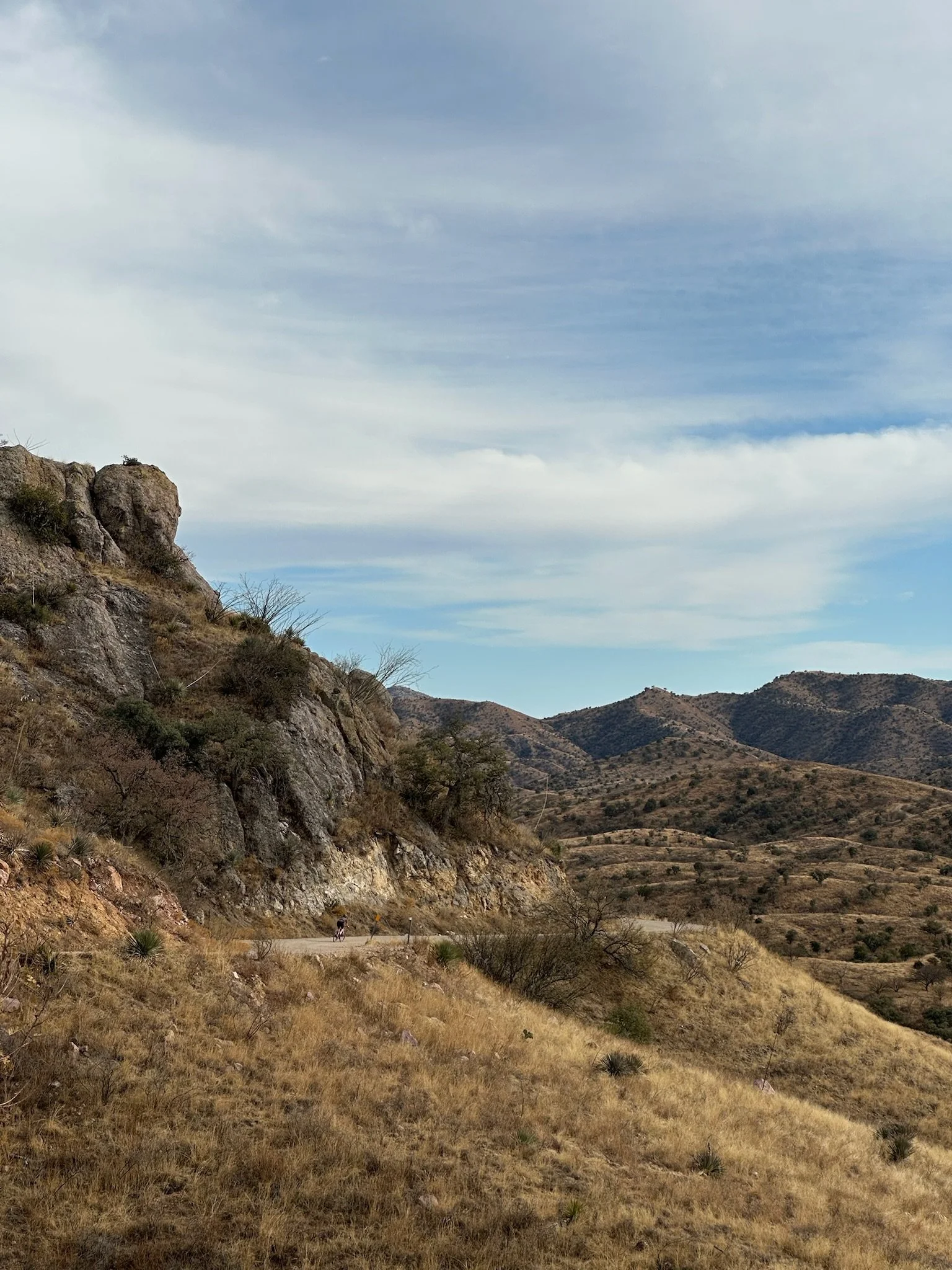
But I eventually made it back to the car! I looked at my dusty bike, examined my already-sharp tan lines, replayed the Arizona views, and remembered how ecstatic I’d felt at the start of the ride. I focused on the wins: I didn’t need to predict every obstacle—only to navigate them as they appeared. My gels fixed my blood sugar lows. And while my palms hurt, I miraculously felt no pain in my arms. I was ecstatic at the discovery that my Redshift stem and seat post worked so beautifully, because that meant one less thing I had to worry about riding gravel with diabetes.
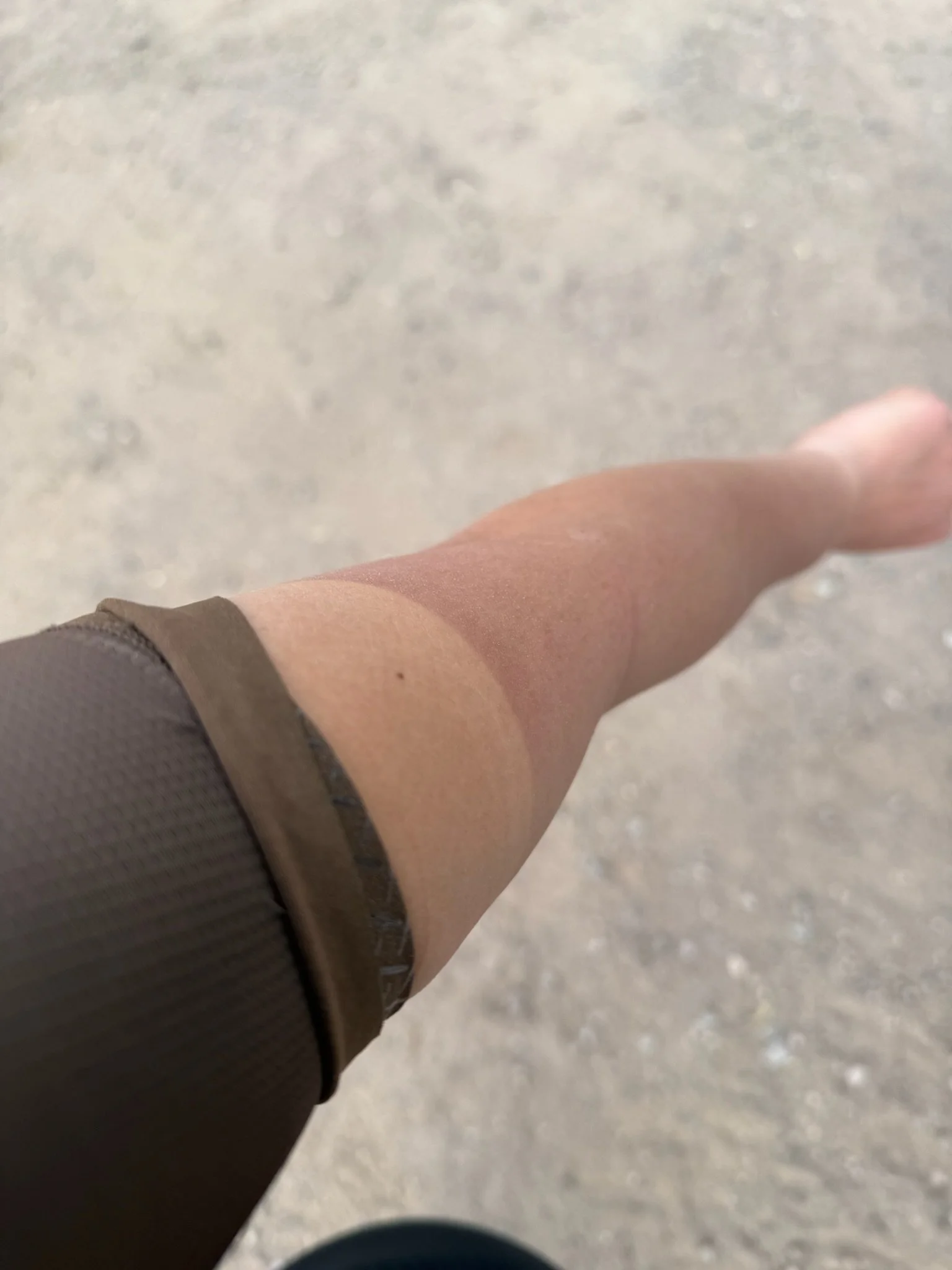
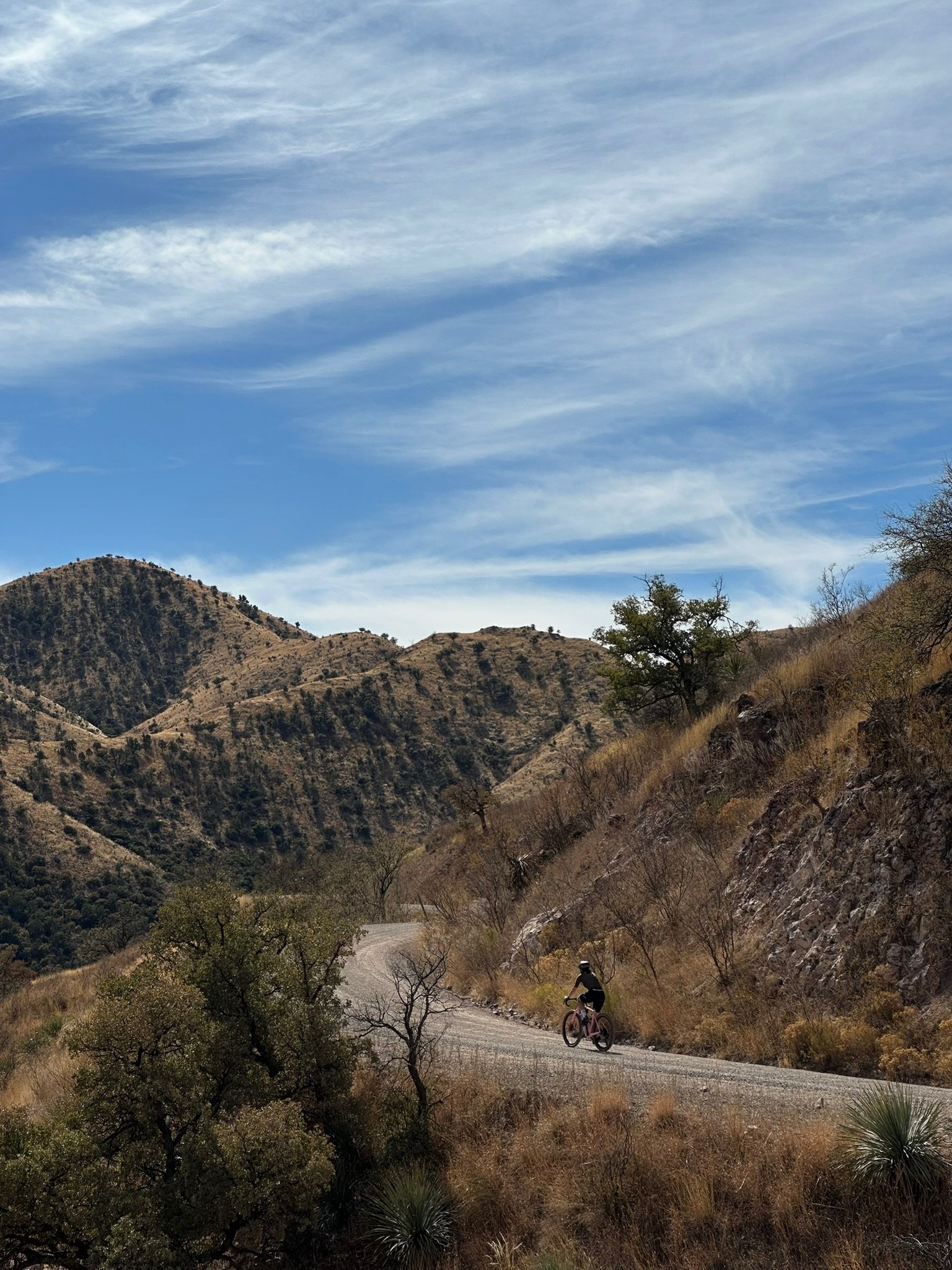
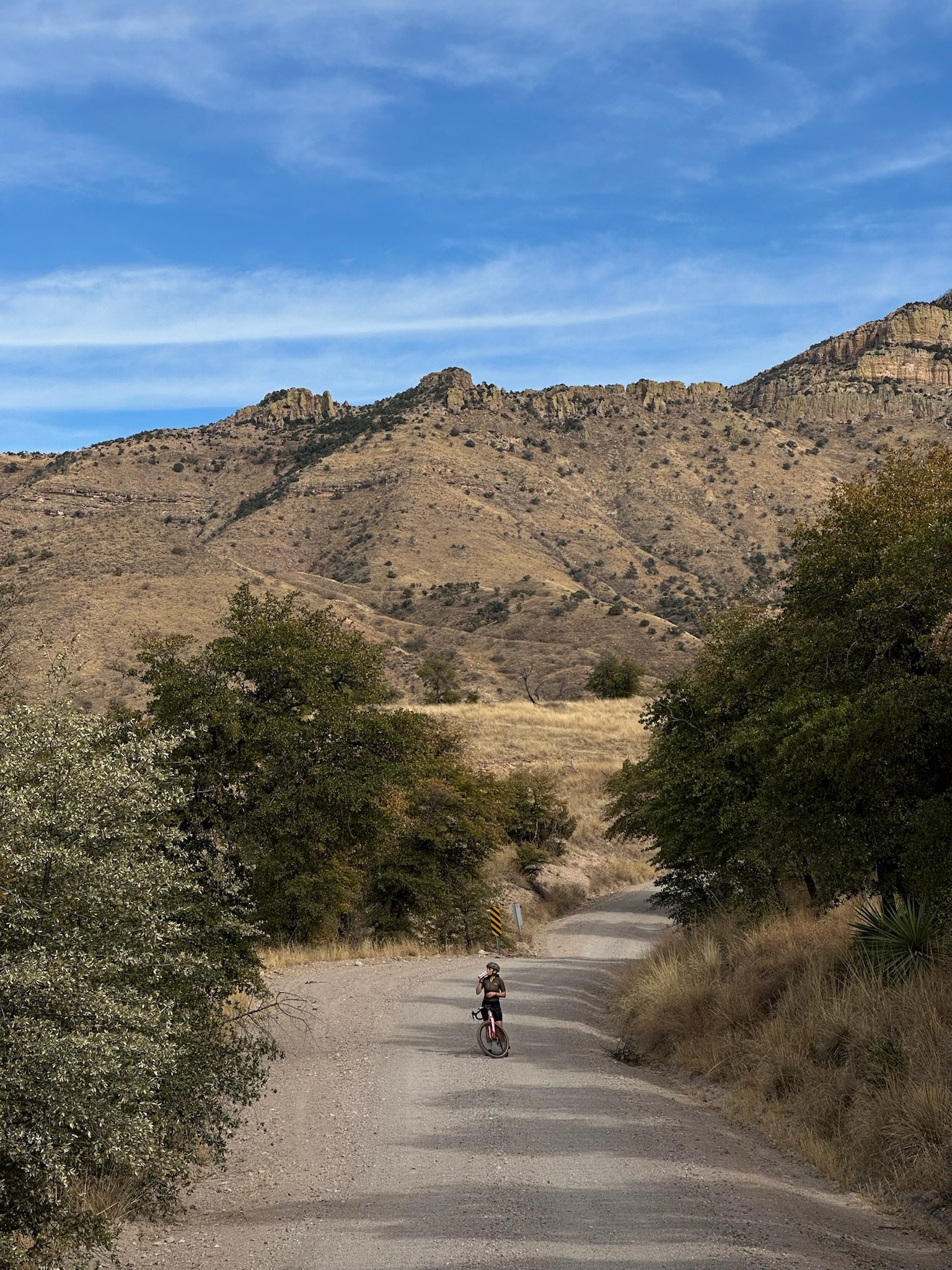
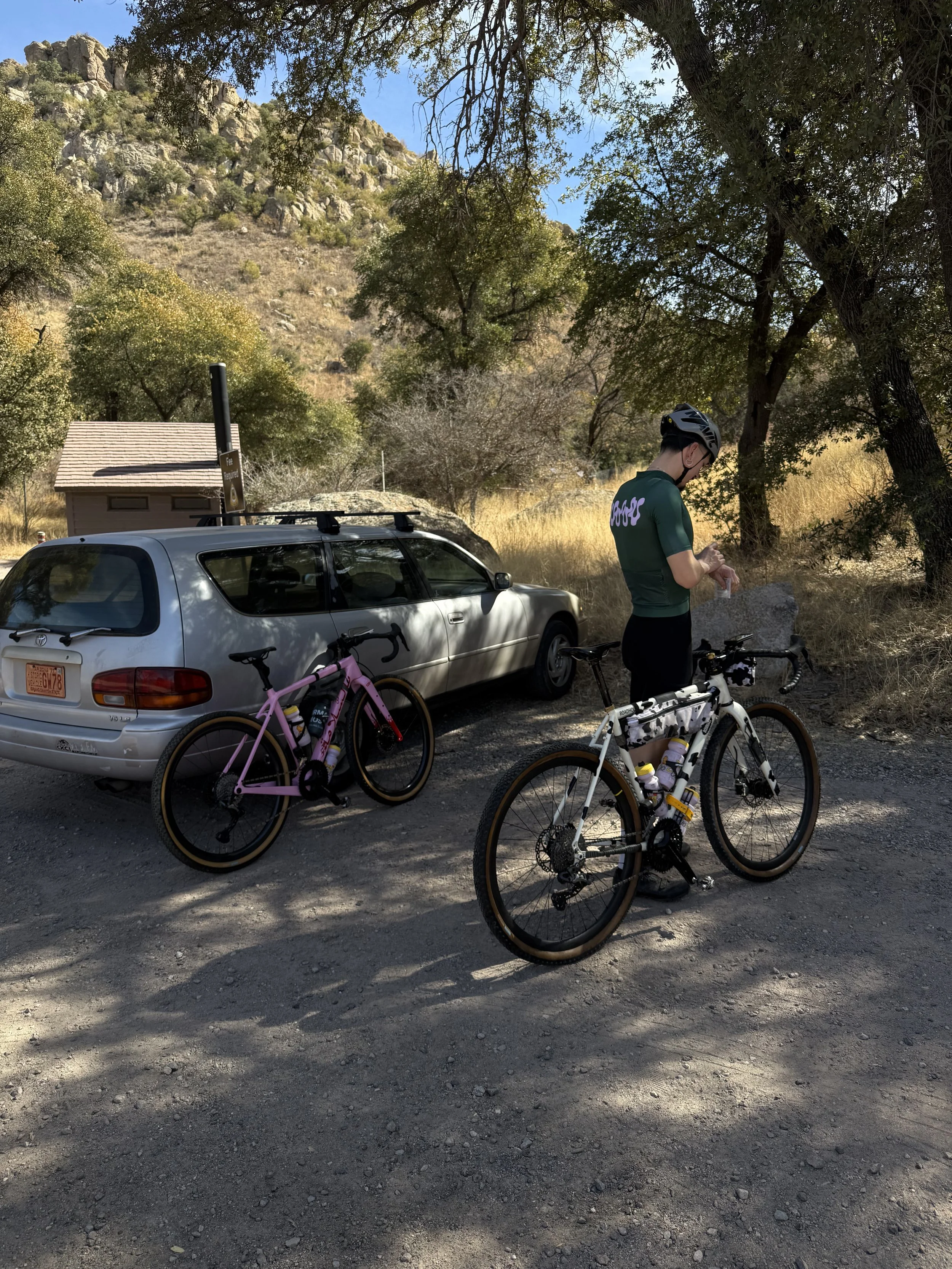
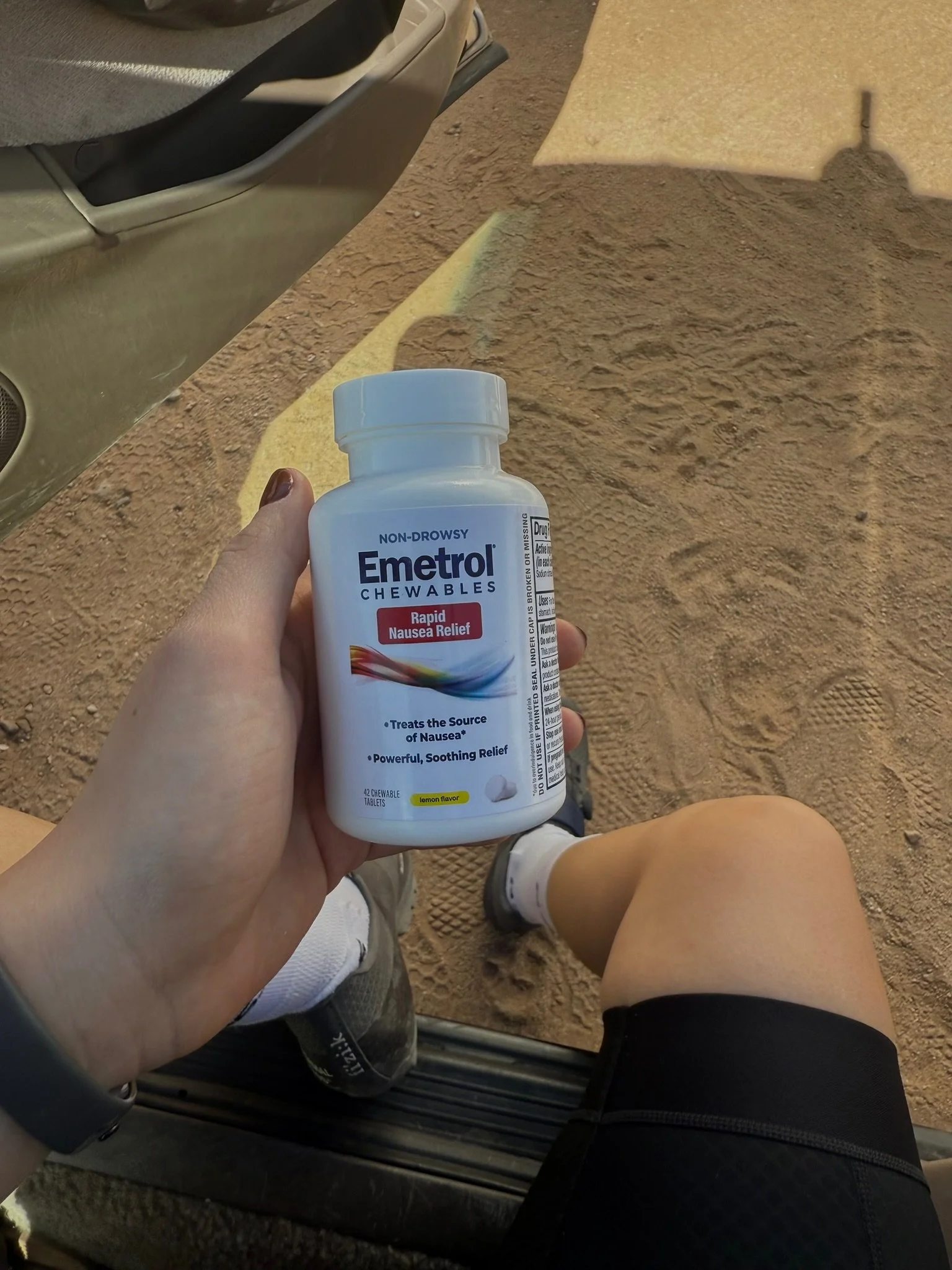
On the way home, I picked up gloves and nausea pills for the altitude sickness. I fixed what I could and felt ready to “fucking send it” again the next day. Which I’m glad I did, because up next was a Tortolita Mountain Park ride—one of my all-time favorite days on the bike.
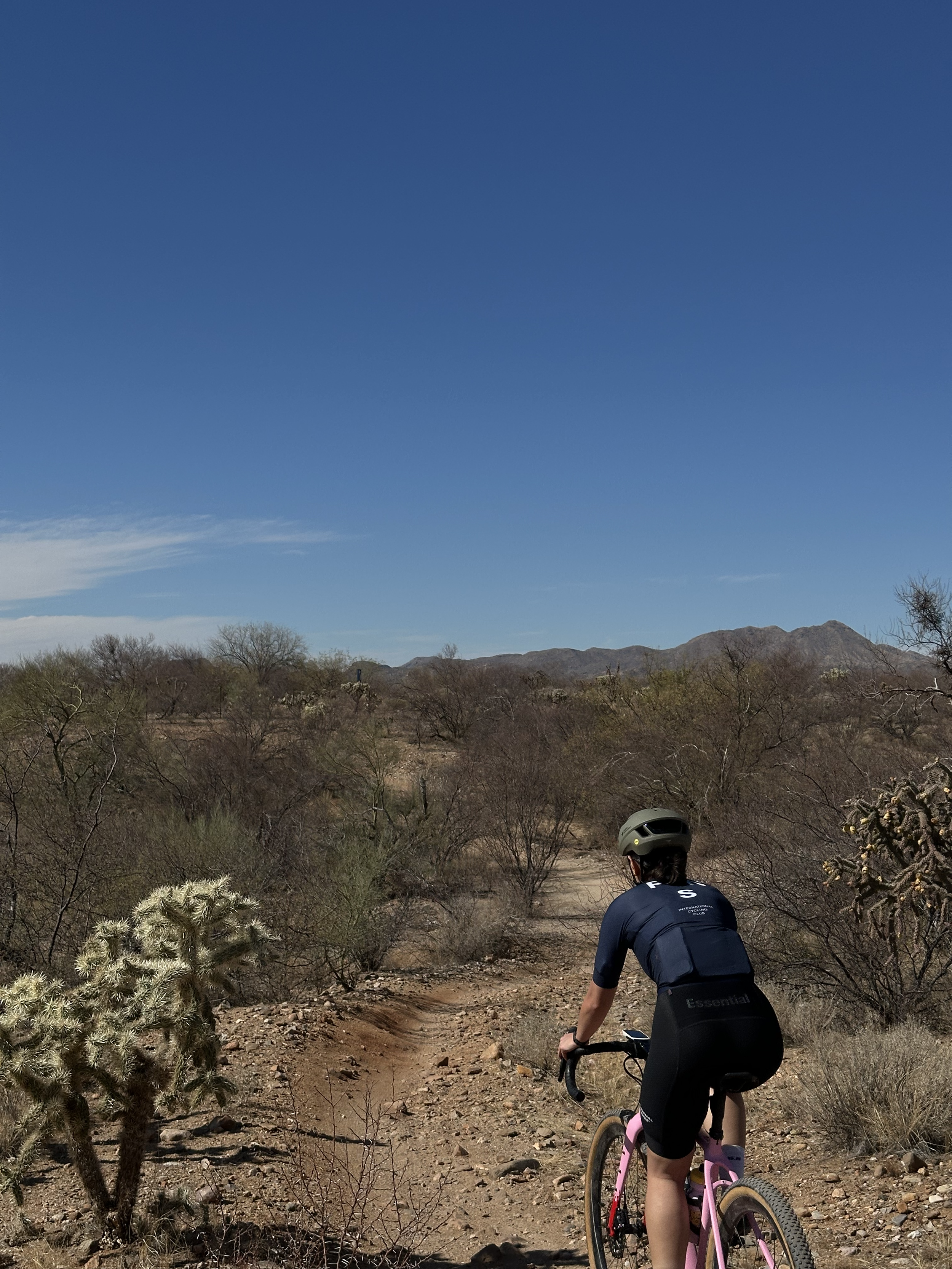
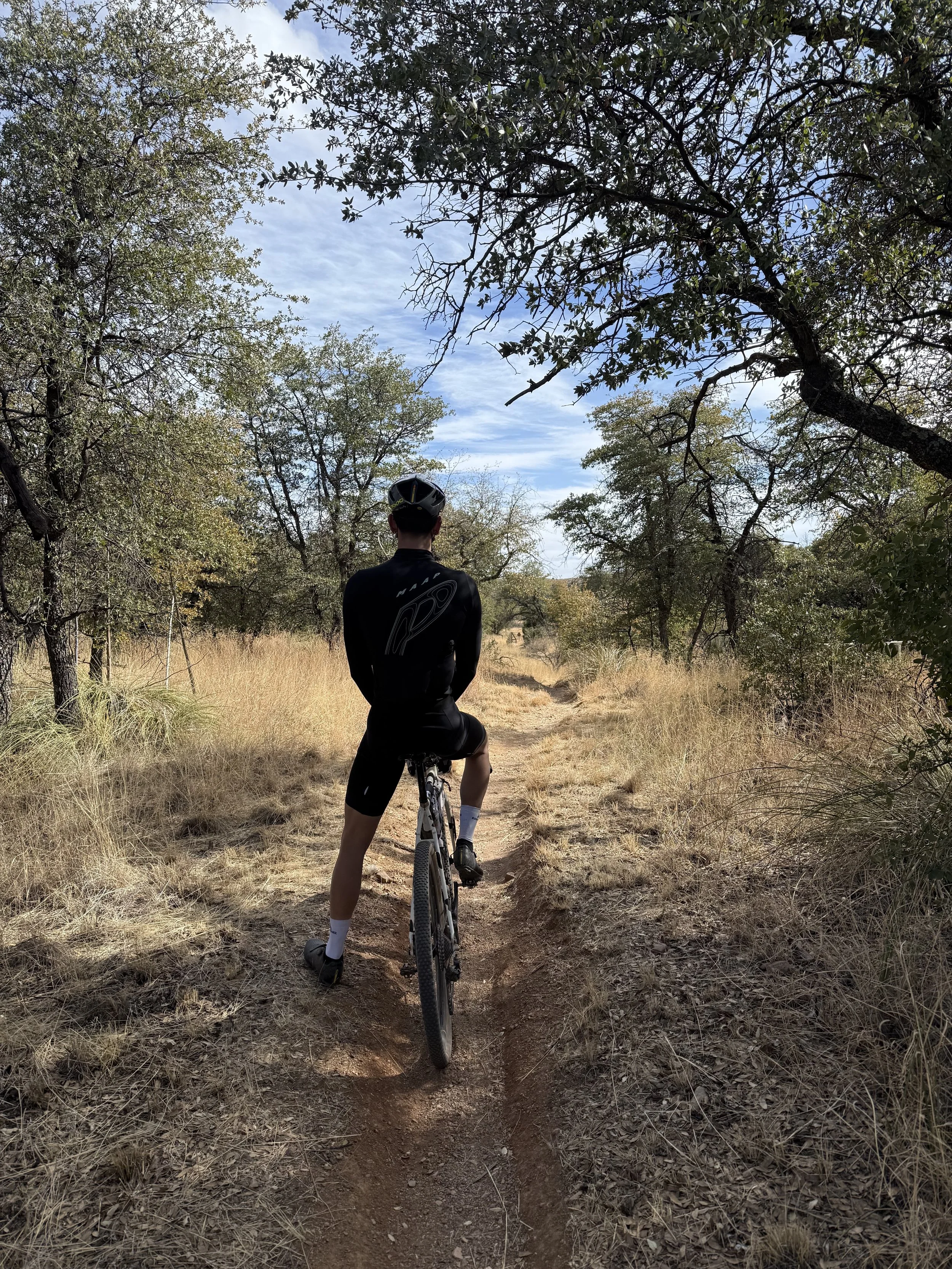
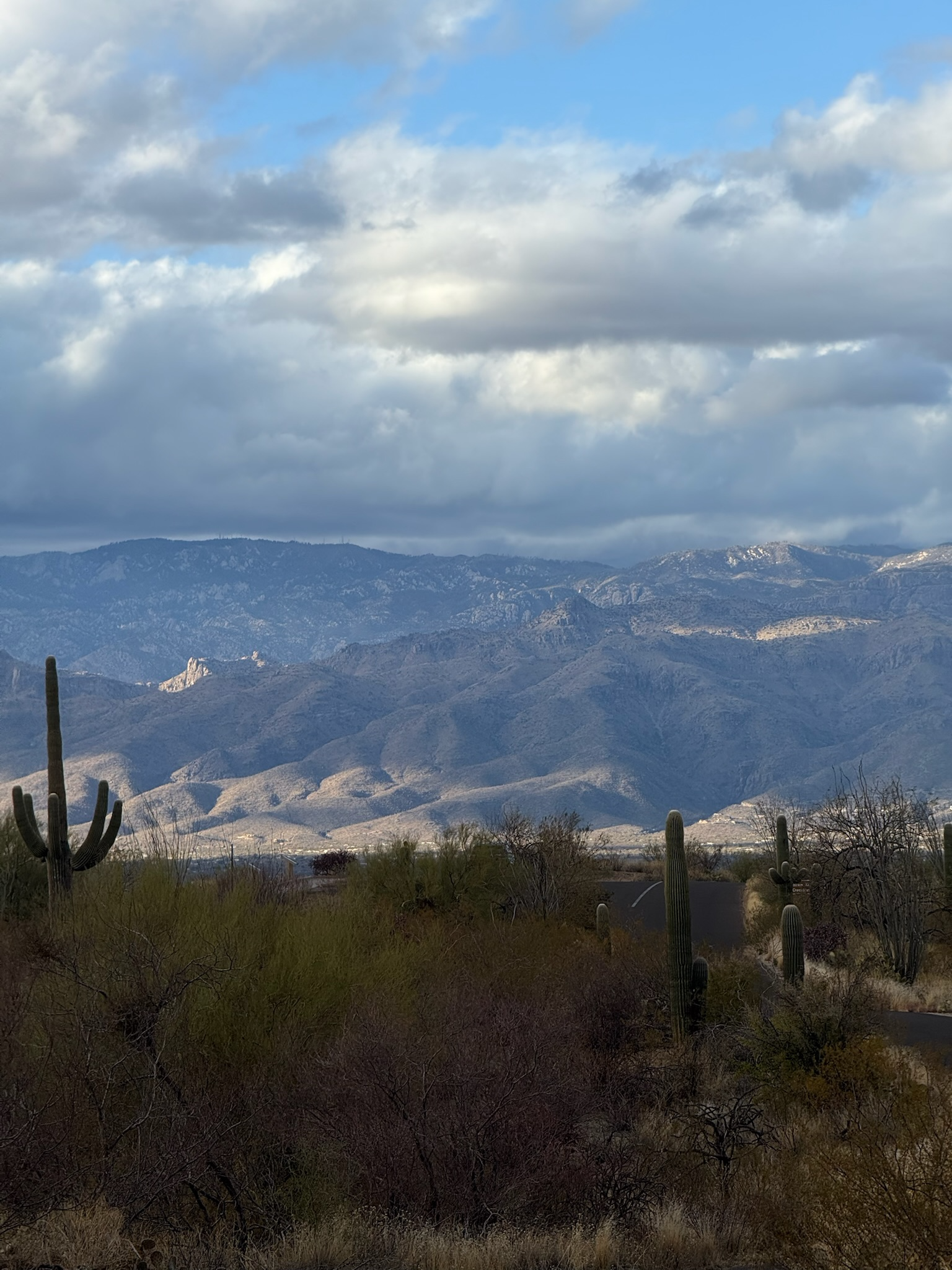
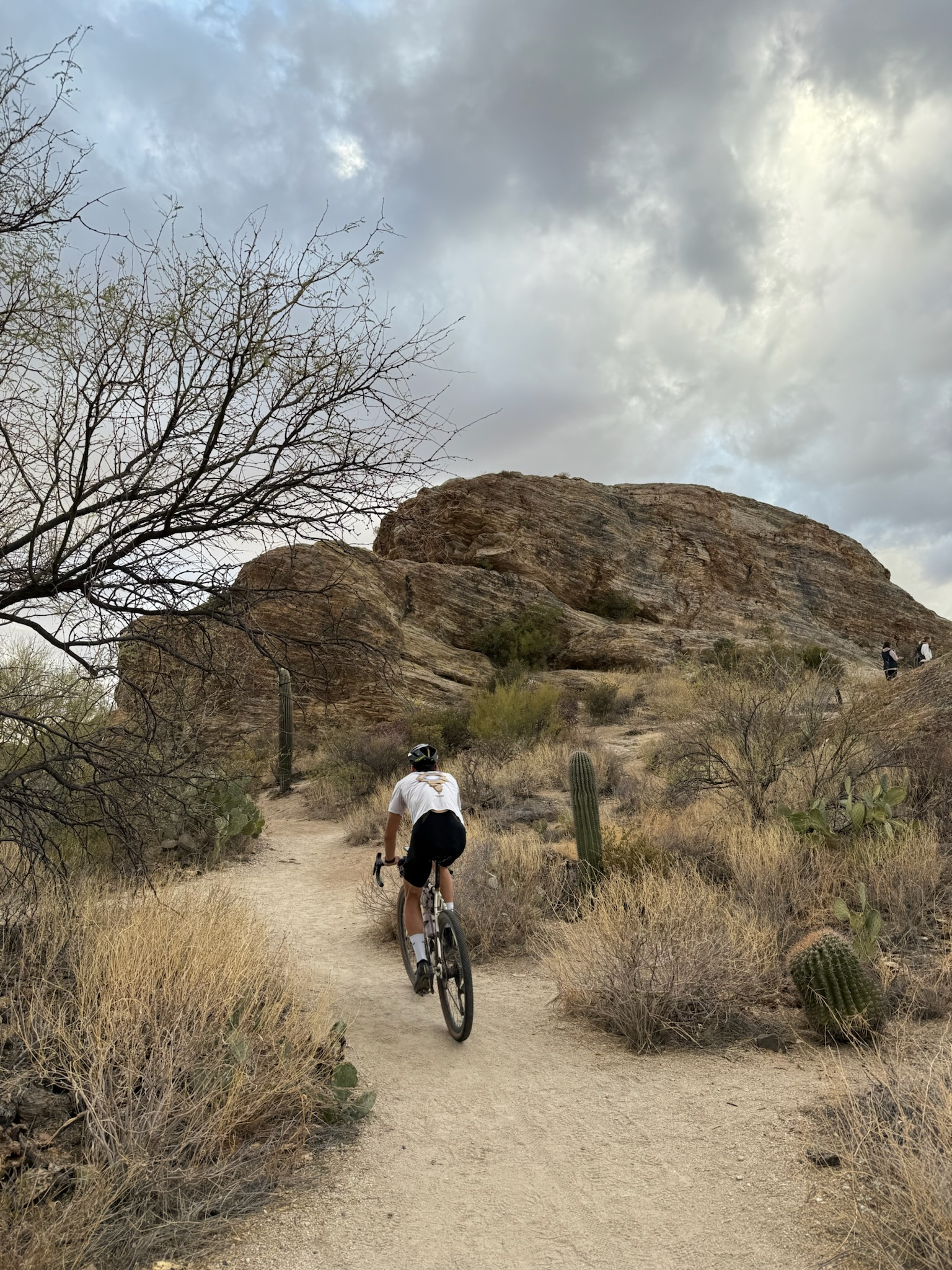
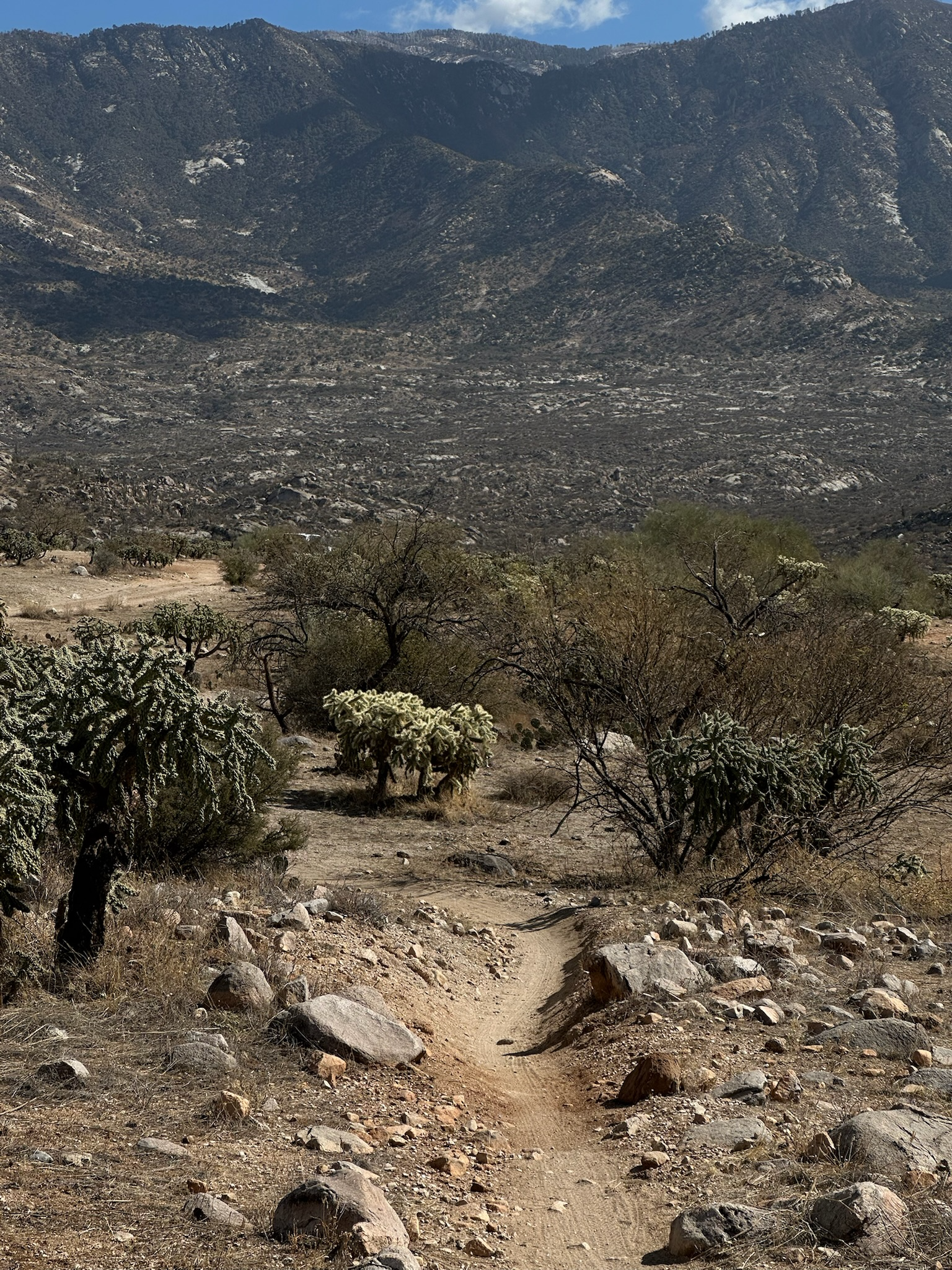
The next morning was a comical juxtaposition to the emotions of the previous day. I was high on sunshine, blasting 2000s pop Arabic hits with the windows down while going 85 mph in a borrowed 1995 Toyota Camry Wagon down an Arizona highway. At the ride start, I popped two nausea pills, took a shot of pickle juice, counted my gels again, and headed out onto a few miles of twisty desert singletrack, weaving through a corridor of cacti with the beautiful Santa Catalina Mountain range in the distance. Talk about a flow state.
Singletrack from Alder’s POV
This ride was only 51 miles with ~2,700 feet of climbing, but it felt like I experienced every kind of terrain imaginable. I navigated dips and sharp turns in the singletrack with little shrieks, and picked my lines through steep descents of loose, chunky rock gardens and ruts with loud, nervous (manic) giggles. The deceptively deep sand pits caught me off guard—like so much else on this ride I was experiencing for the first time—but I happily pushed through.
It was really important to me to succeed that day. I kept a close eye on my blood sugar, especially after punchy climbs, and my gels held it in range for most of the ride despite the heat. I remedied the nausea with more pills and the washboard pain with gloves. It wasn’t until mile 45 that my blood sugar dropped and stayed stubbornly low after a brutal five-mile stretch of deep sand. Two gels later, still riding low, I was ready for home.
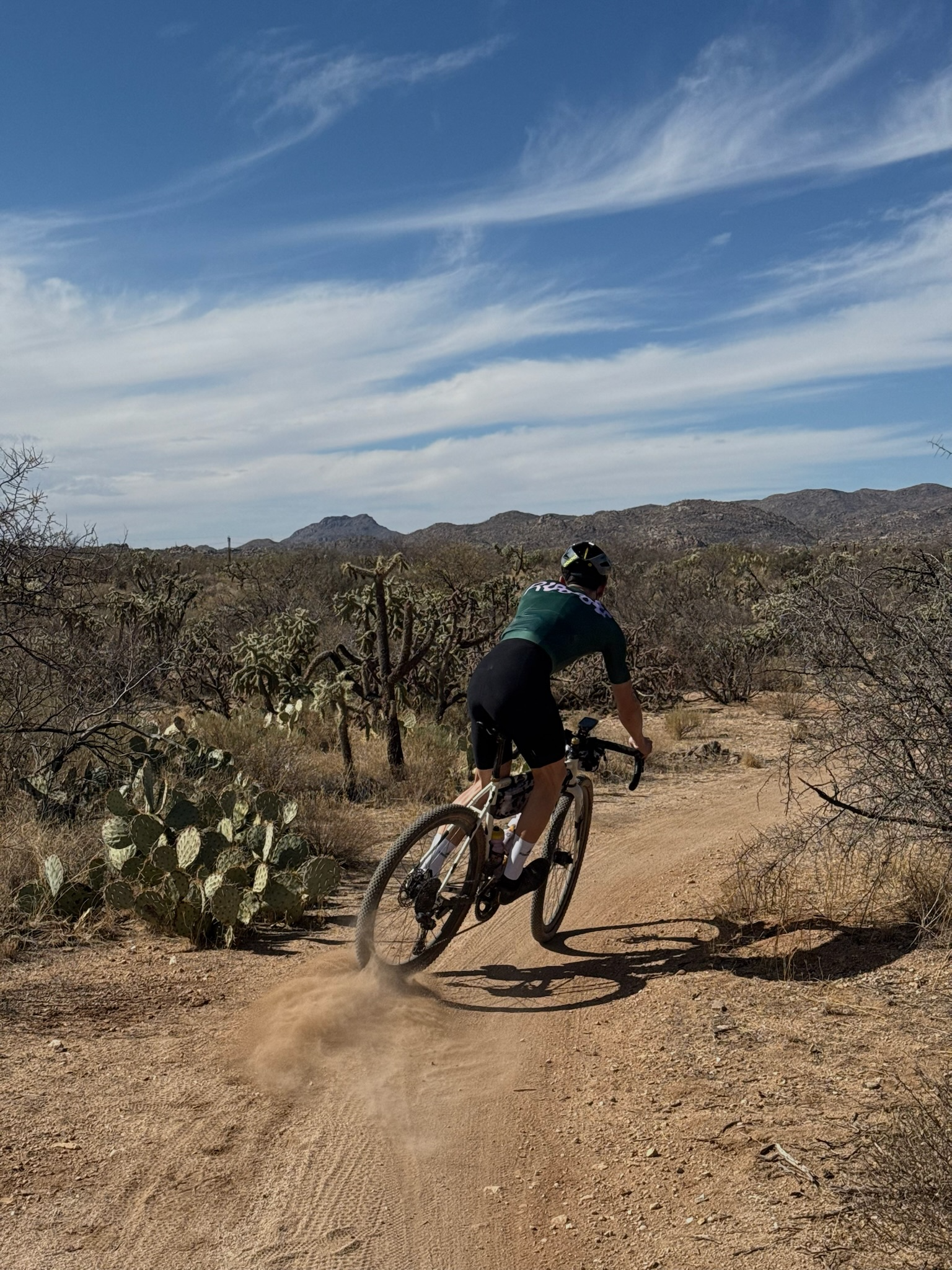
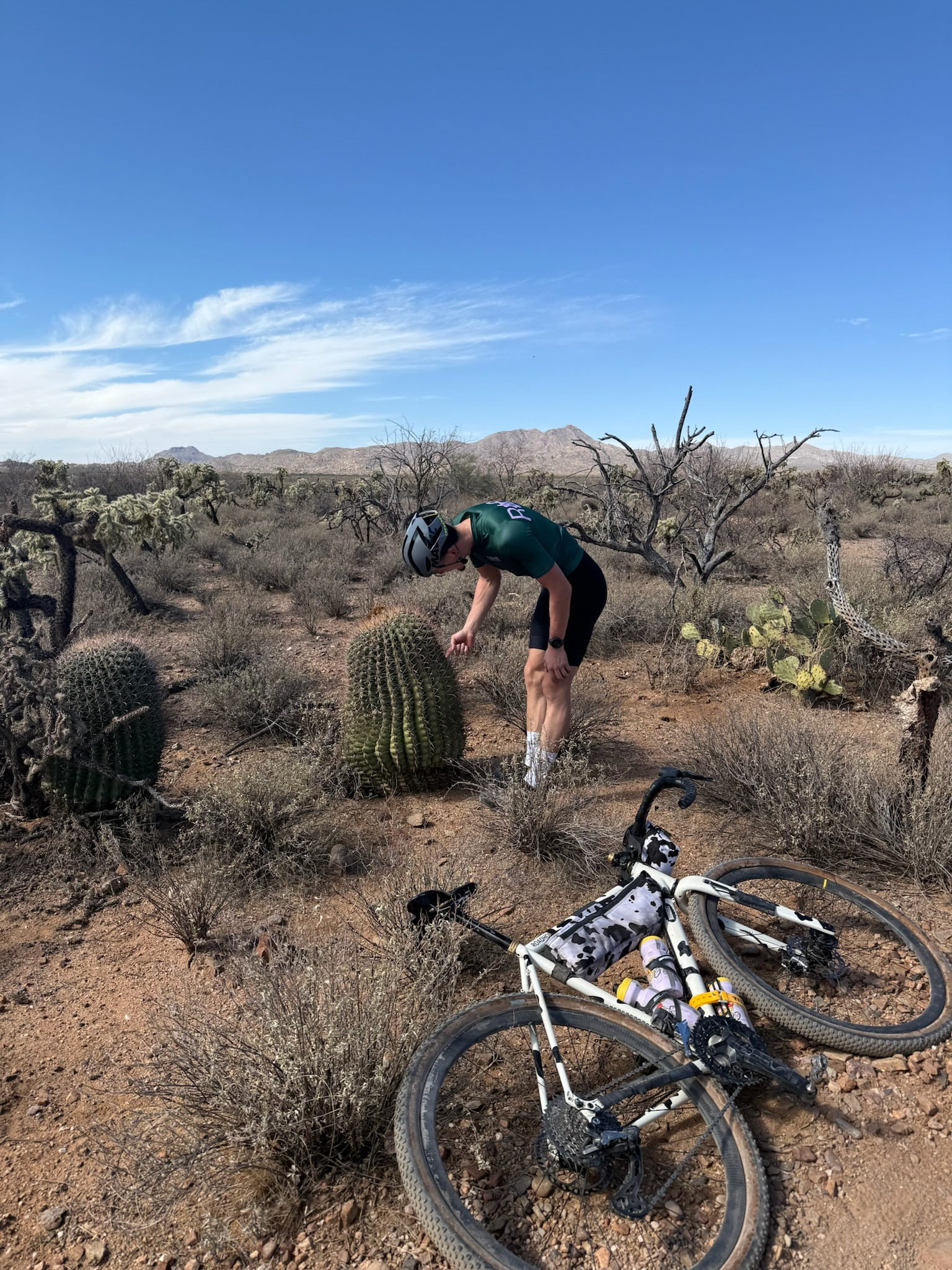

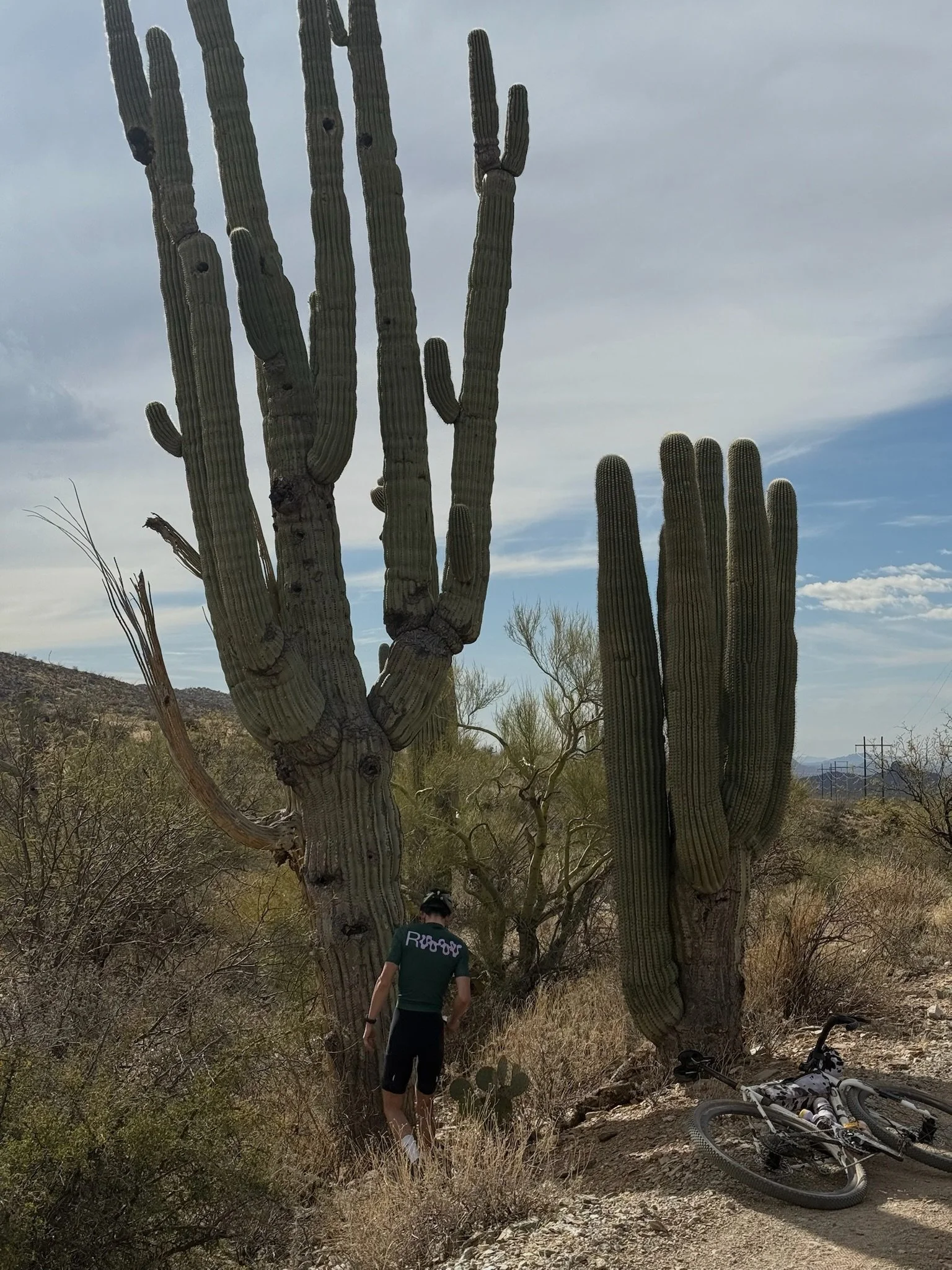
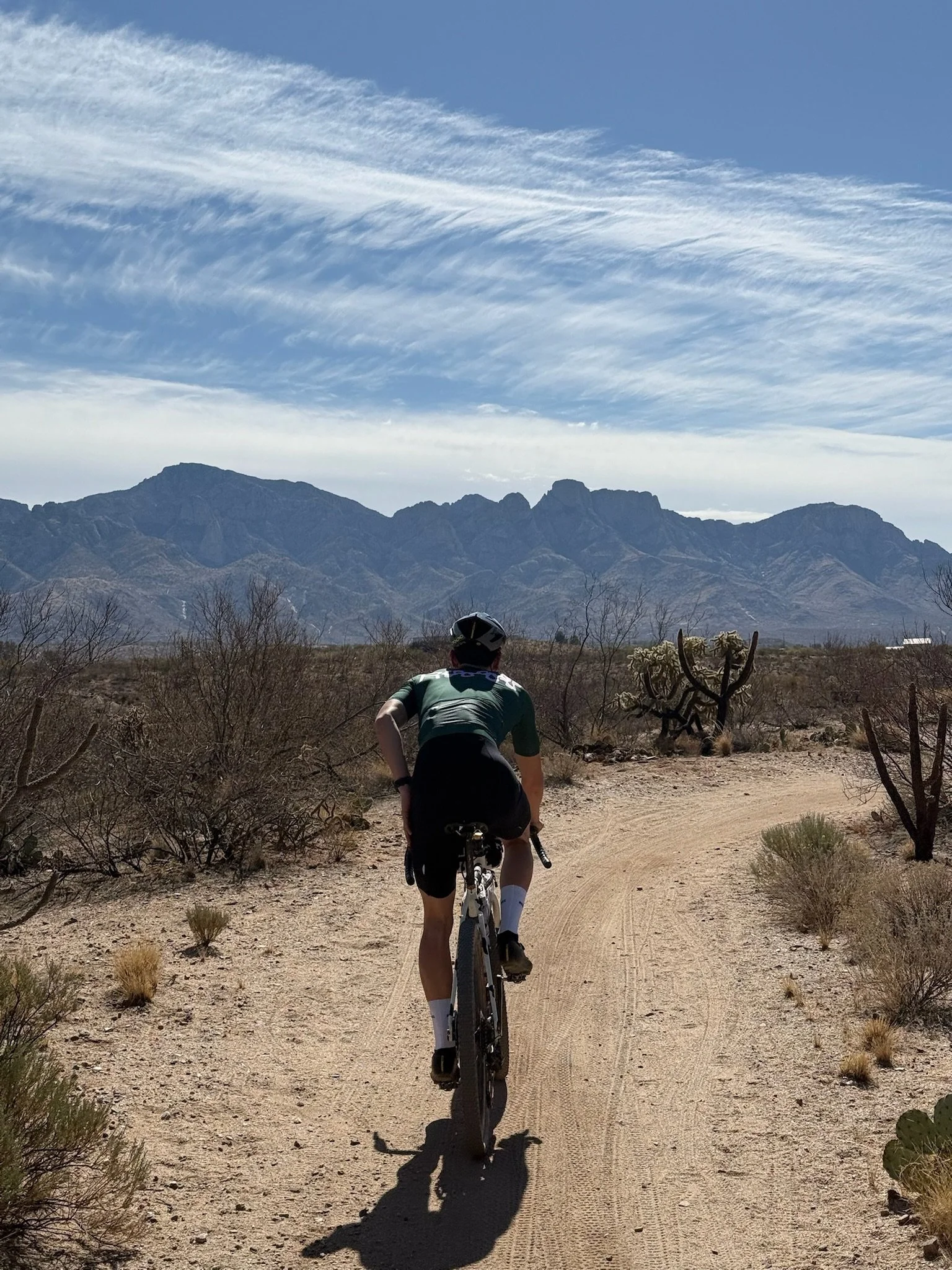
Watching the Catalinas turn a soft pink at sunset, shadows settling into its creases and crevasses, the ride back through Innovation Trail felt magical. I realized how much I’d taken smooth, predictable pavement for granted as a roadie, and how irrevocably lame it felt now that I’d experienced a ride like this.
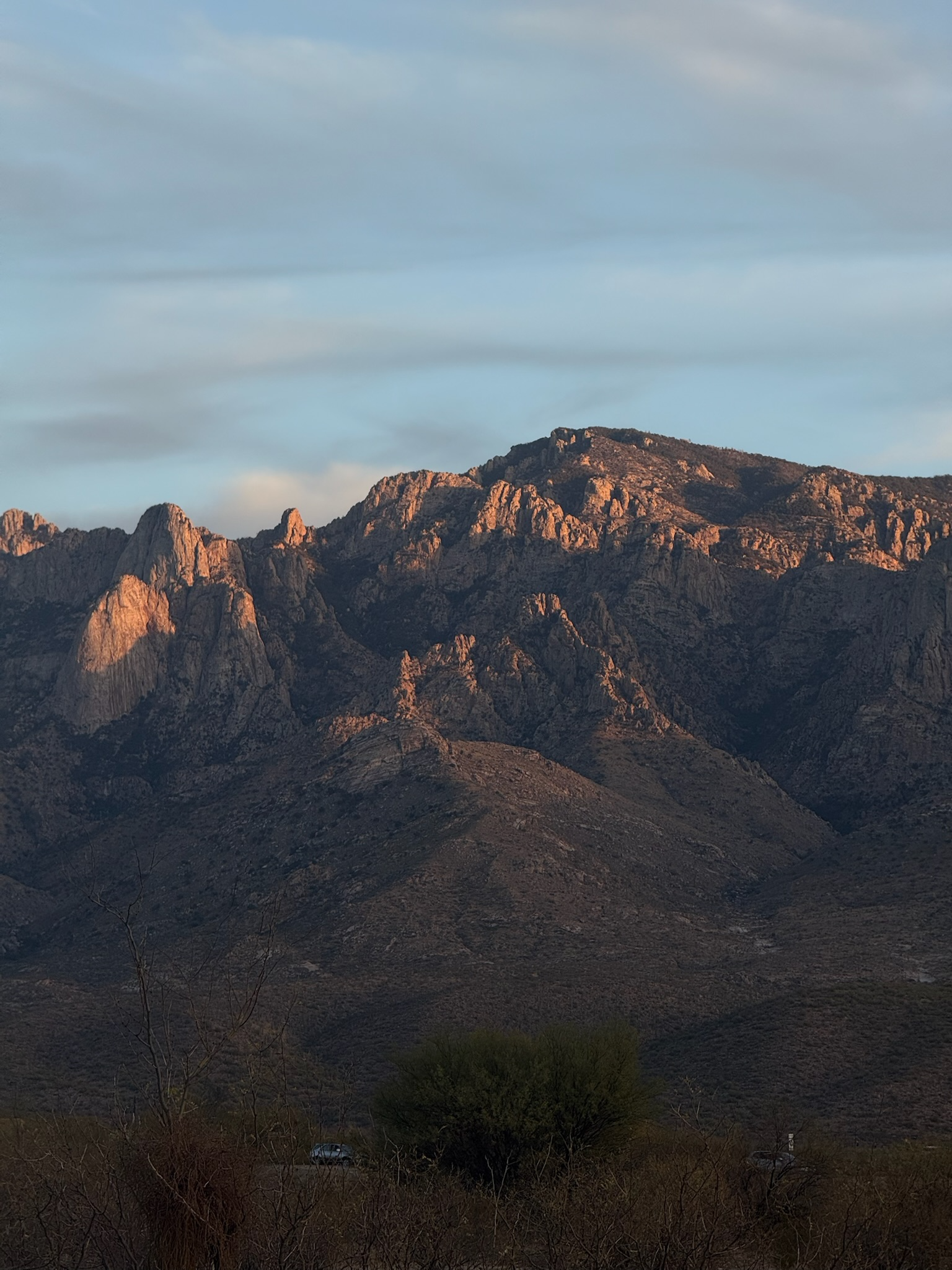
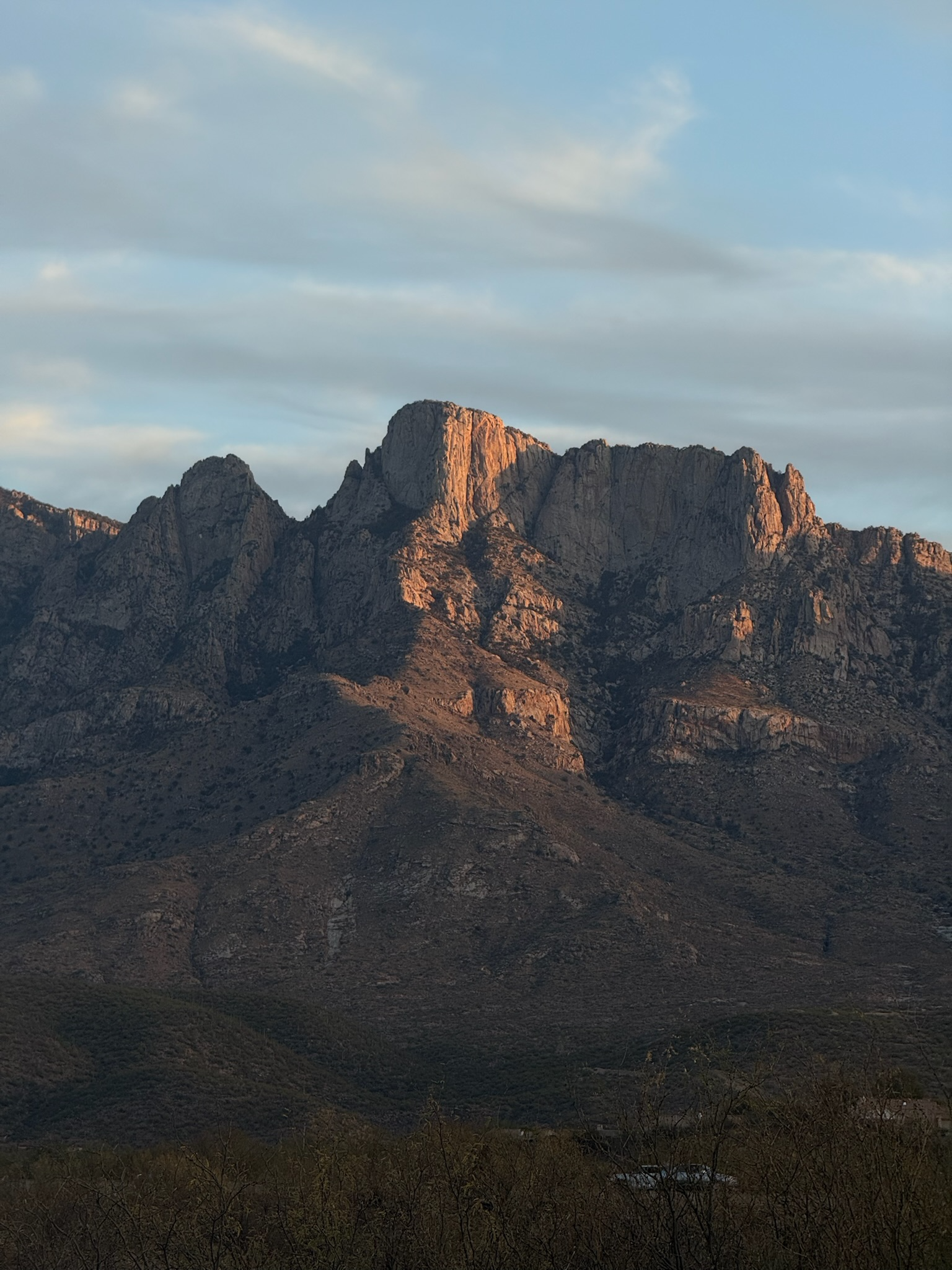
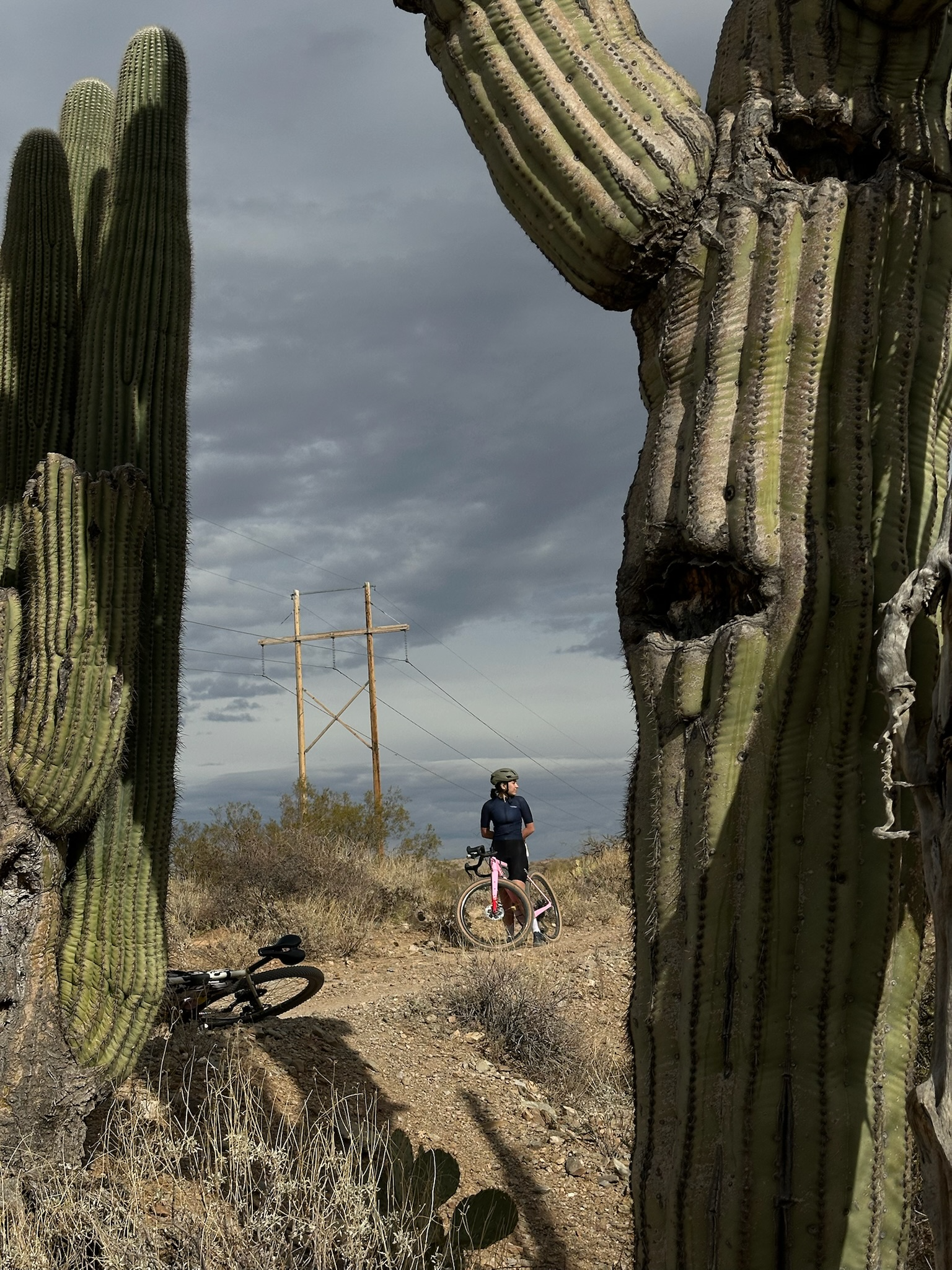
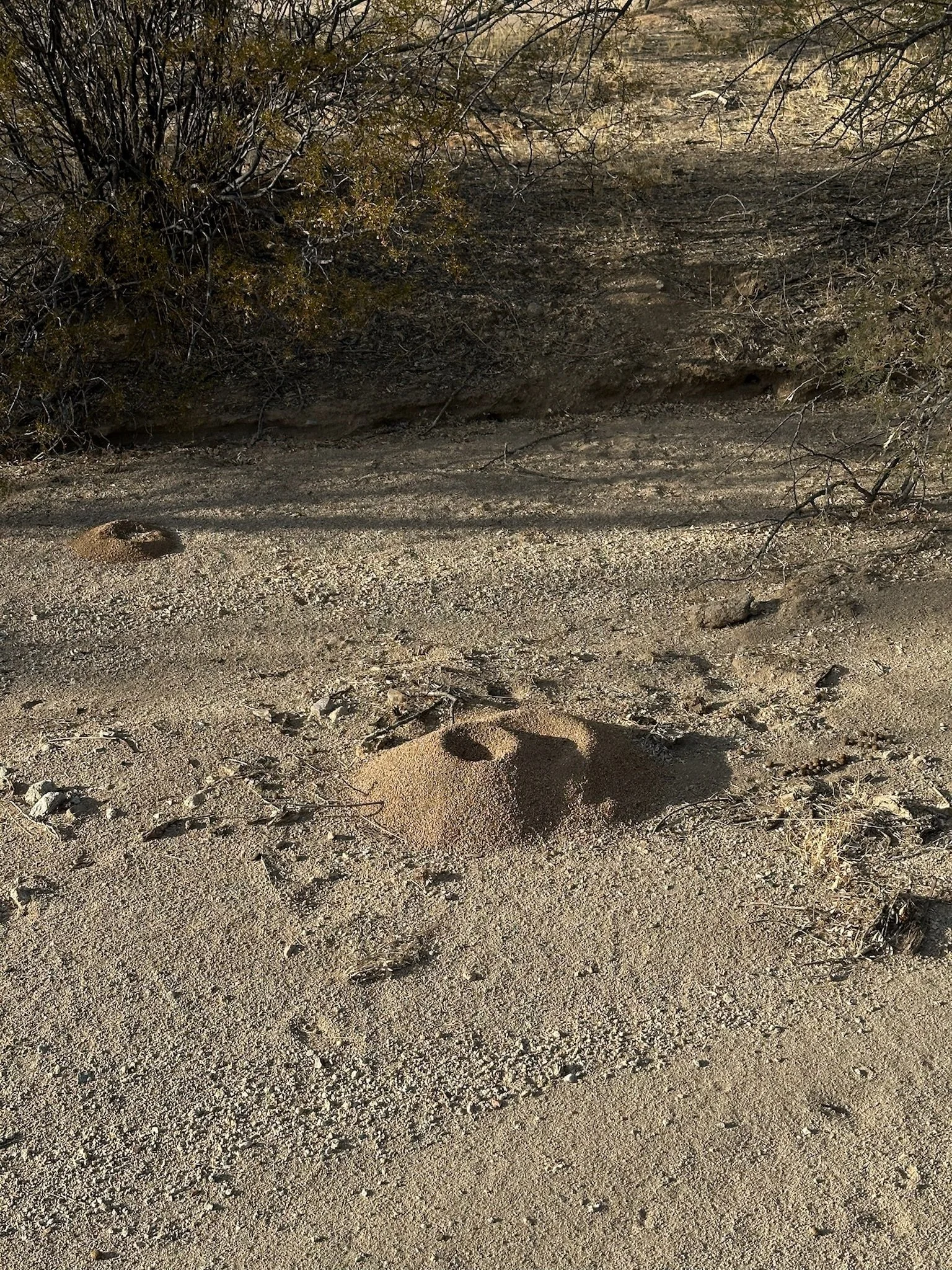
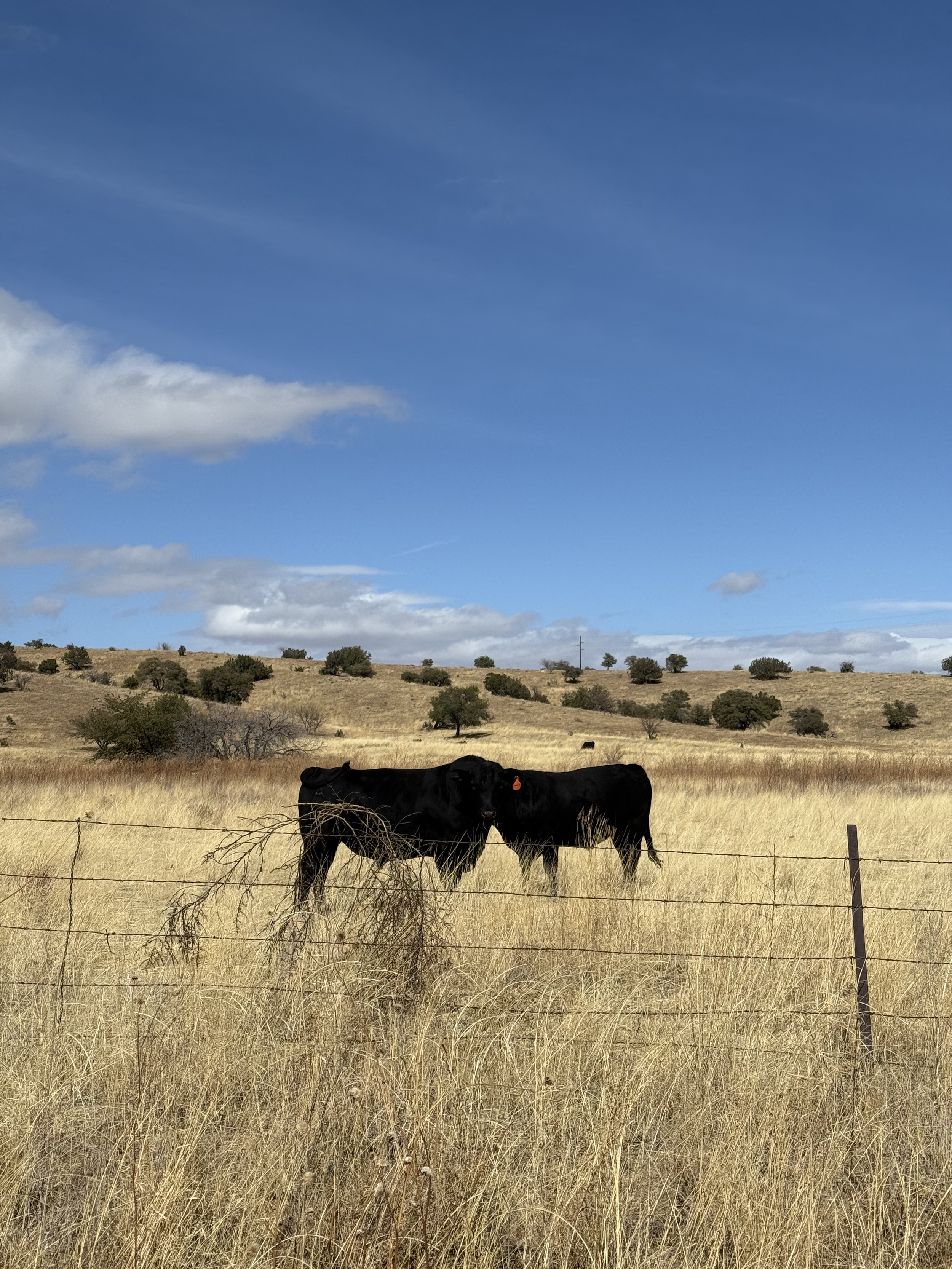
I went to bed that night content, knowing that despite the lows, my diabetes doesn’t have to dictate how far I can go. I still had so much to learn, but I was capable of learning it all. I replayed the sights of skittish cows hiding in the shade, massive ant hills, and towering cacti that made me feel small in the best way. As I drifted to sleep, I felt the same floating sensation I used to feel after long days swimming in Lebanon as a kid—this time, replaced by the memory of riding the Tortolita singletrack—and it filled me with a warm, childlike joy.
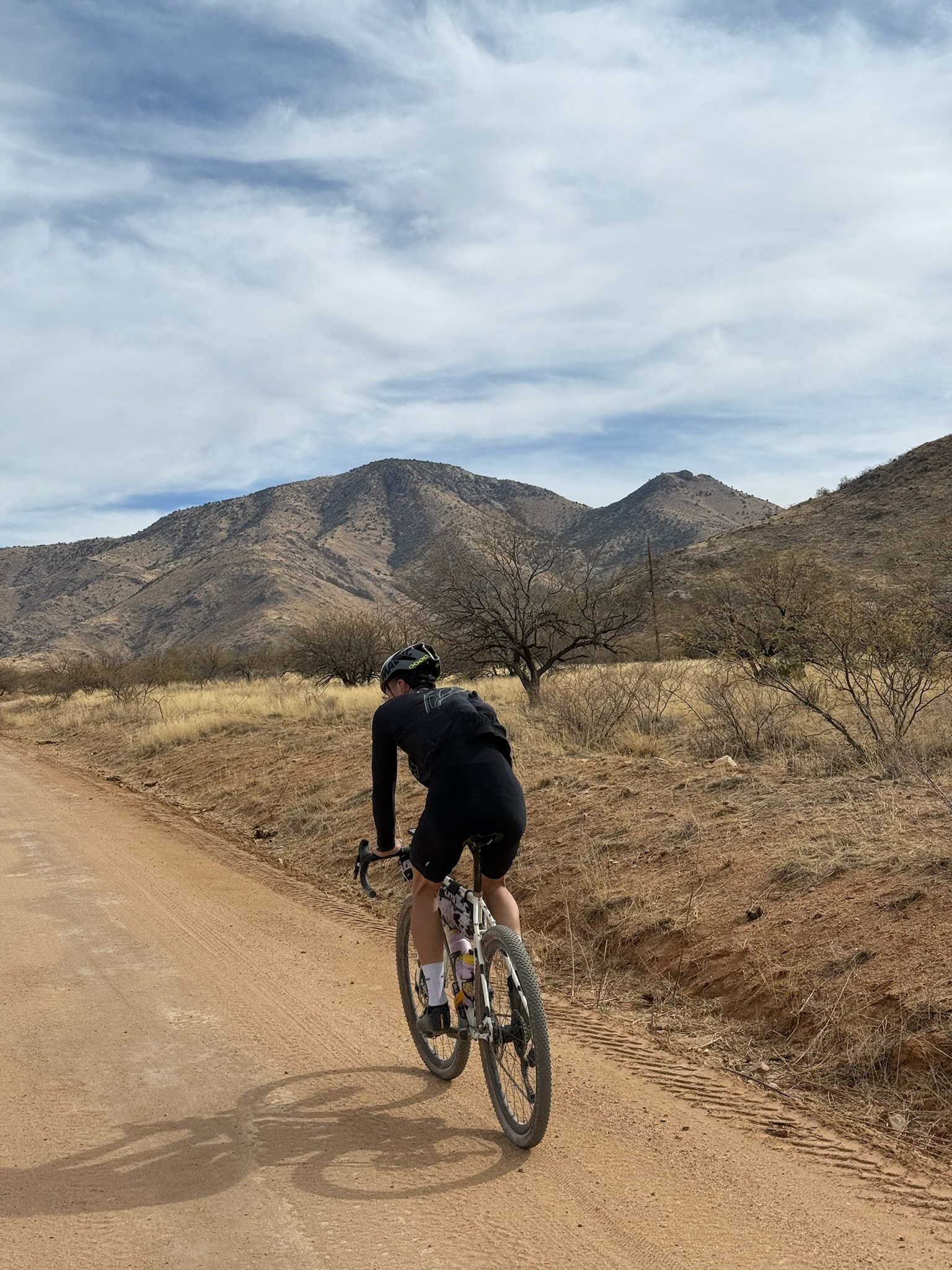
The rest of the week brought one more rough ride and three incredible ones. After a rest day, we set out to ride through Box Canyon. The climb began gradual and smooth, then gave way to steep mountain switchbacks, each revealing views of even bigger, more imposing peaks. At the top, I greeted a few cows before we disappeared into a trail littered with laughably massive, loose, chunky rocks.
For nearly 30 miles, every pedal stroke felt wasted. I was spinning against a surface that constantly slipped, shifted, and fought back. As a long-time roadie, pouring power into the ground with so little return was deeply frustrating, and with that, my low blood sugar anxiety returned.
I tried reminding myself of all the lessons I’d learned so far, but fear and anxiety took over, spiking my blood sugar. I hovered above 220 mg/dL for nearly three hours, bringing brain fog and heavy legs. After a series of clumsy overcorrections while trying to avoid large rocks on a rutted descent, I took a fall and hit my seat stay. Seeing the scratch on my fresh paint was my breaking point.
Trying to learn so many new skills at once, while juggling the physical and emotional highs and lows of blood sugar management, was more overwhelming than I’d expected. The emotional labor of self-reassurance and constantly rationalizing fear with diabetes is a quiet struggle that’s hard to articulate. Every blood sugar extreme creates a mental tug-of-war: your body needs to keep moving to prove you’re okay, while your brain screams stop in self-preservation.
After the fall, I had a panic attack, cried a little, and walked so much of the rocky stretches I might as well have logged the ride as a hike. I eventually got back on the bike to beat the fading light, and then, my blood sugar dropped. I cried again on the descent, riding for miles stuck between 60 and 70 mg/dL. There was emotional repair to do, but making it back to the car still felt like the biggest win.
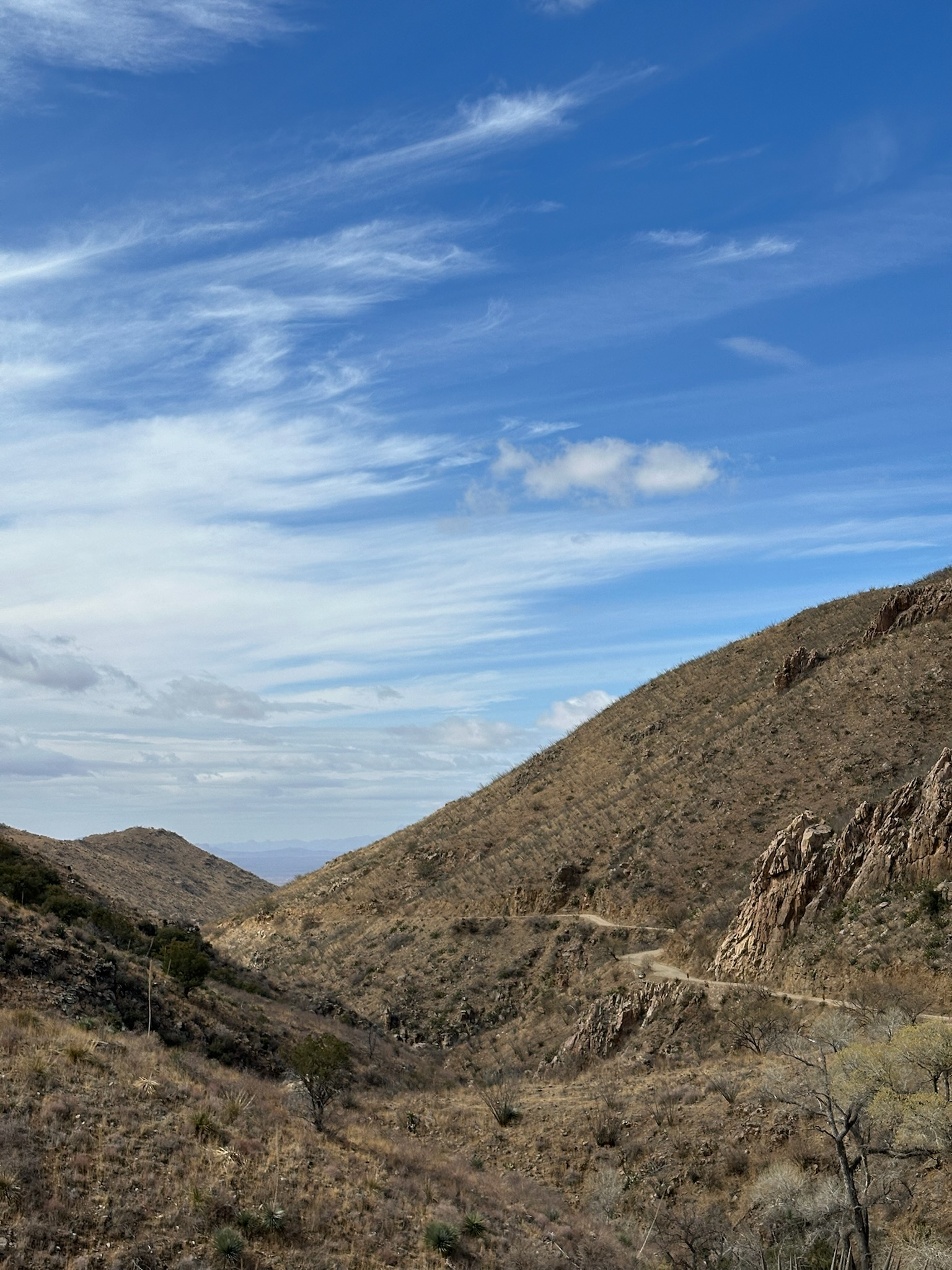

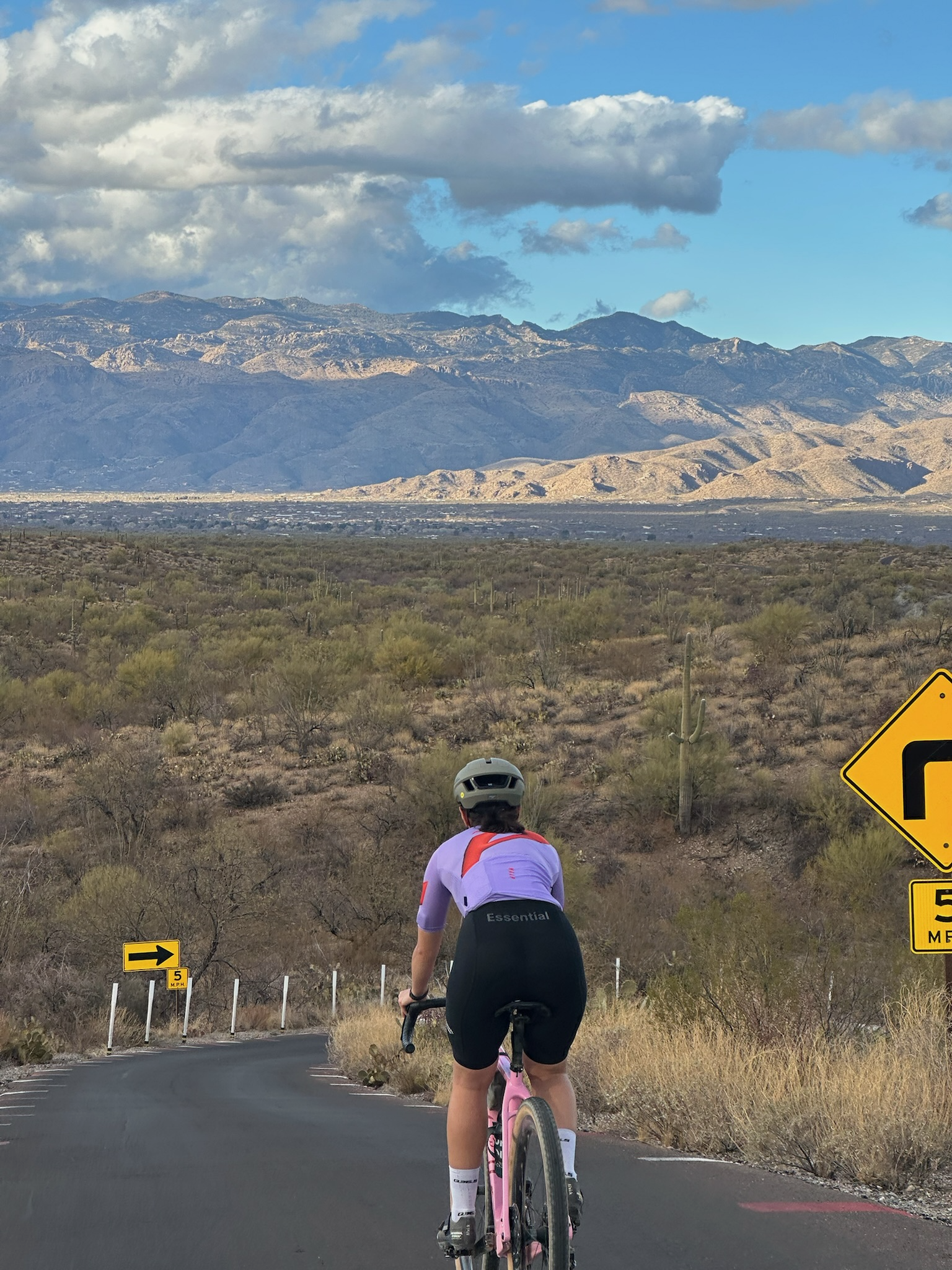
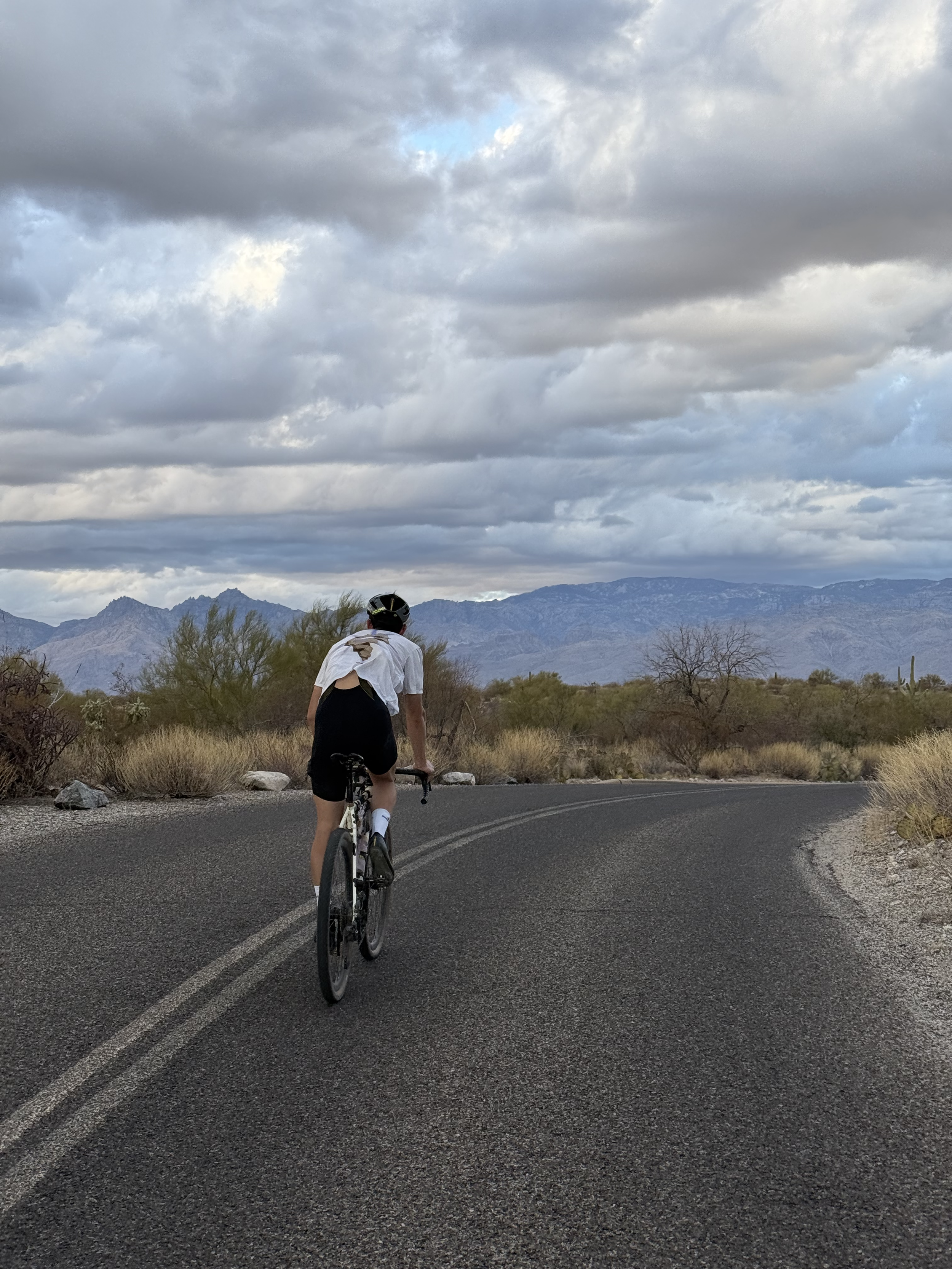
Another lesson learned was that Arizona gravel is not for the faint of heart—or possibly beginners. Even though I’d only brought my 48 knobby René Herse tires, we stuck to road riding for my last few rides to calm my nervous system. That included a peaceful sunset cruise through the Saguaro National Forest West park, which offered some of the most breathtaking views of the trip, overlooking more of the Catalina, Rincon, and Tucson mountains.
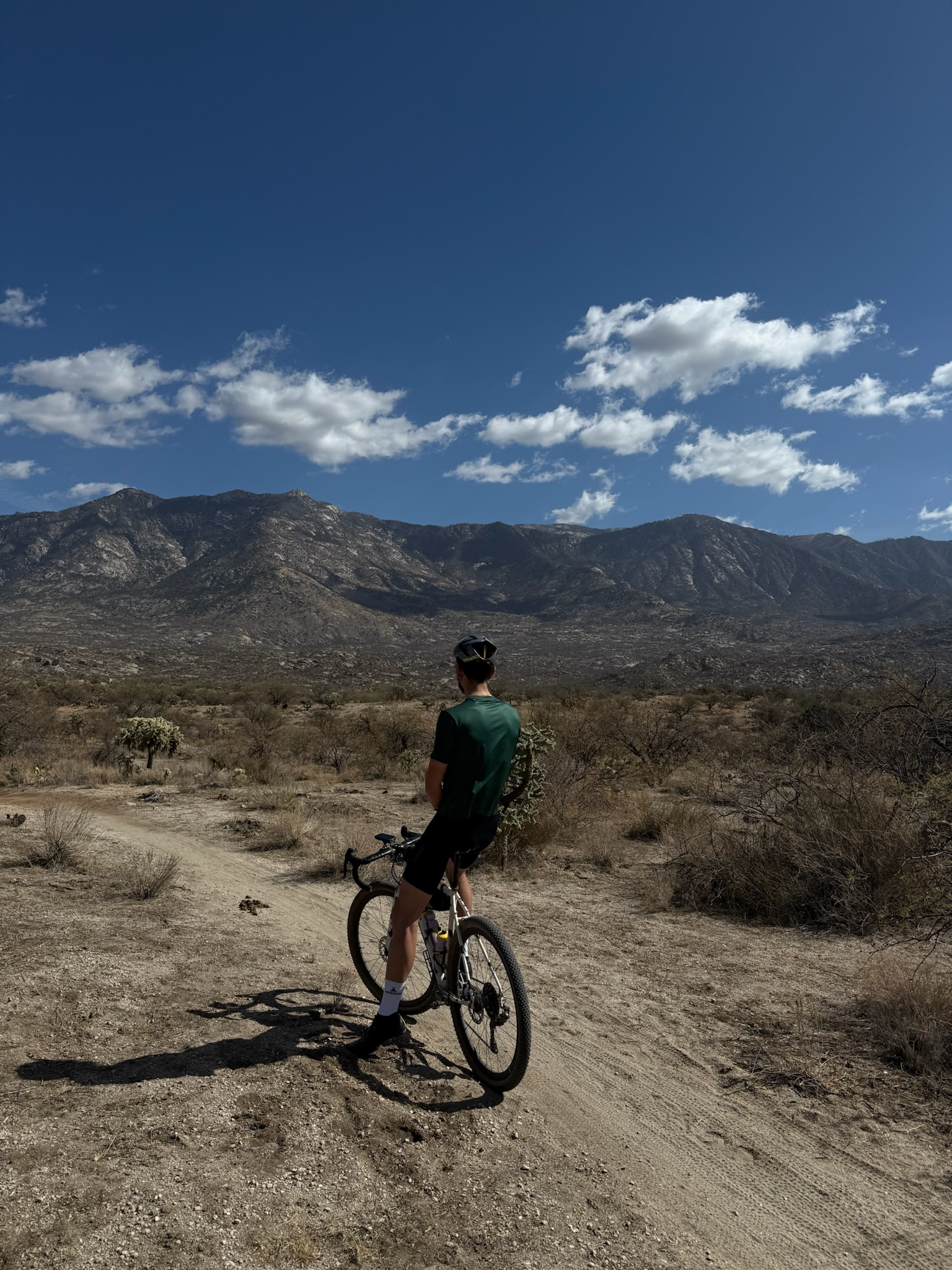
And last, but certainly not least, was Mt. Lemmon.
I decided to do the climb solo and catch up on the descent because I wanted the freedom to manage my blood sugar without the pressure of keeping pace. This wasn’t about power data or average speed; the goal was simply to see if I could complete ~5,500 feet of climbing over 20 miles without severe lows, about 2,000 more feet than I’d ever done over that distance.
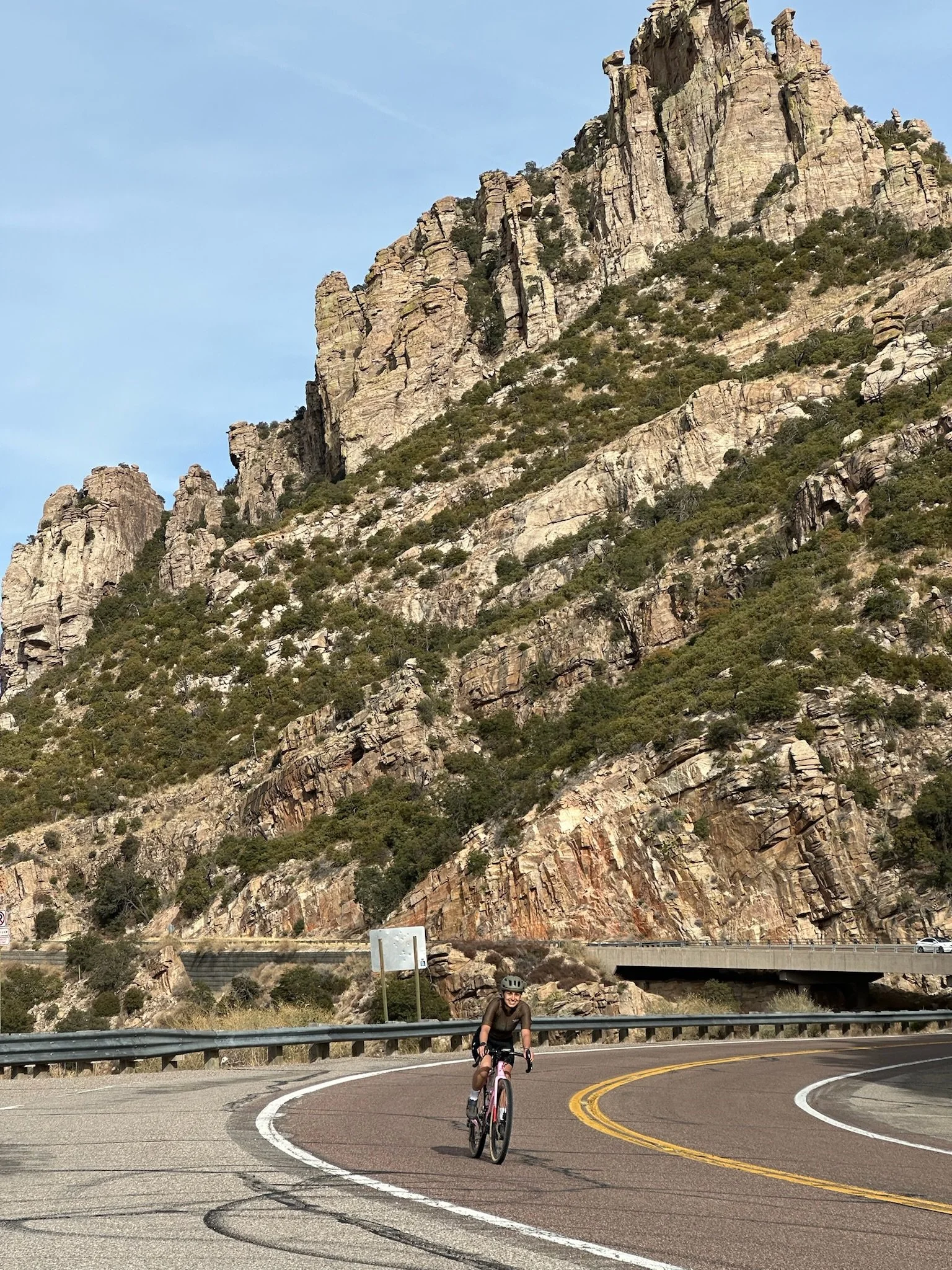
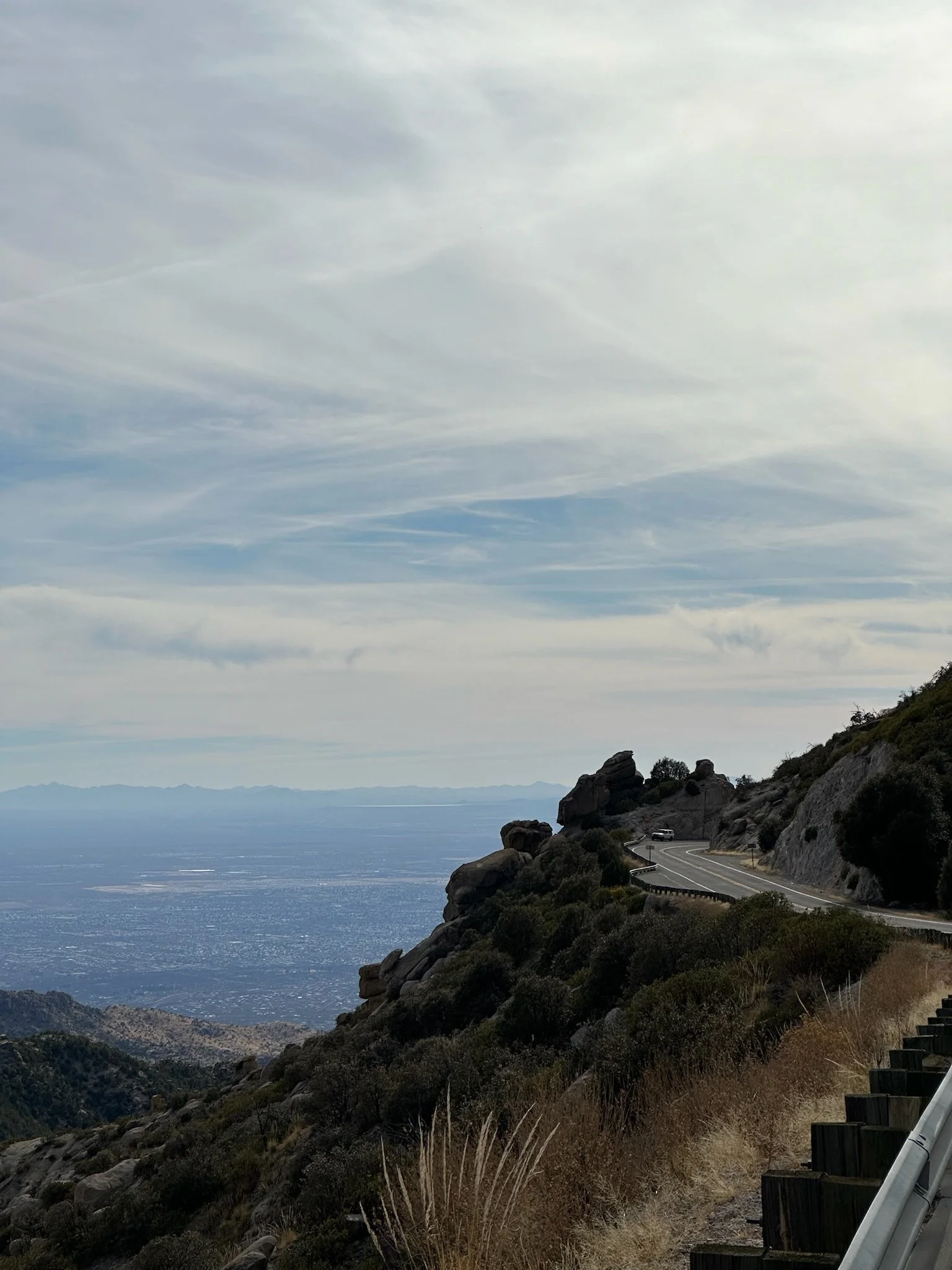
Mt. Lemmon ended up being one of my most memorable cycling days, and possibly my most successful in terms of blood sugar management. With a handful of nausea pills, a few breaks, and three perfectly timed gels, I kept my blood sugar around 132 mg/dL all day. I watched Tucson stretch farther and farther below me as I climbed, snapped photos of the winding road, spoke words of gratitude to my bike for carrying me there, and later cursed my 48 knobbies on the 10% pitches. Waves of salt bloomed on my jersey, and I brushed salt flakes off my face—pickle shots never tasted so good.
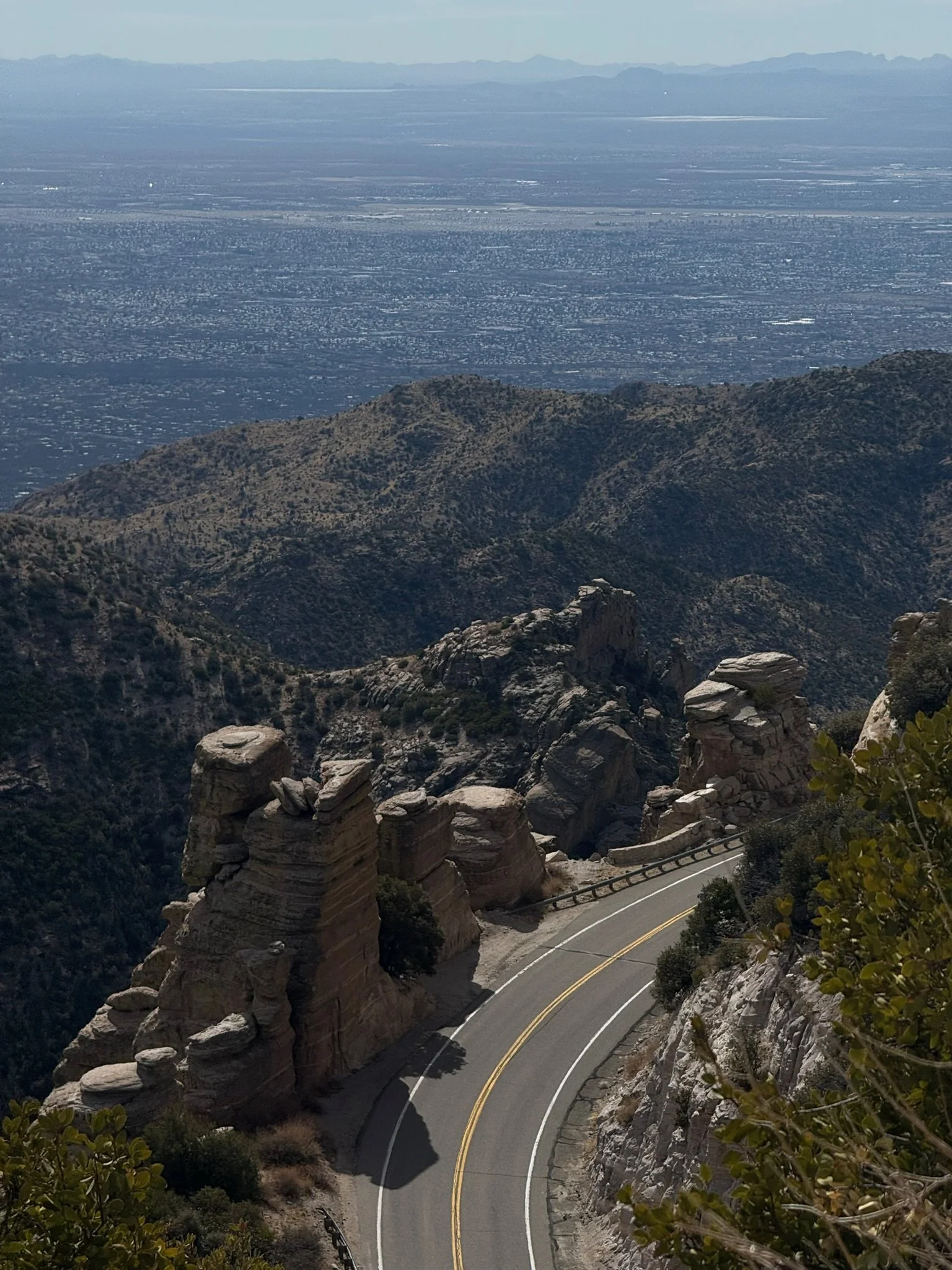
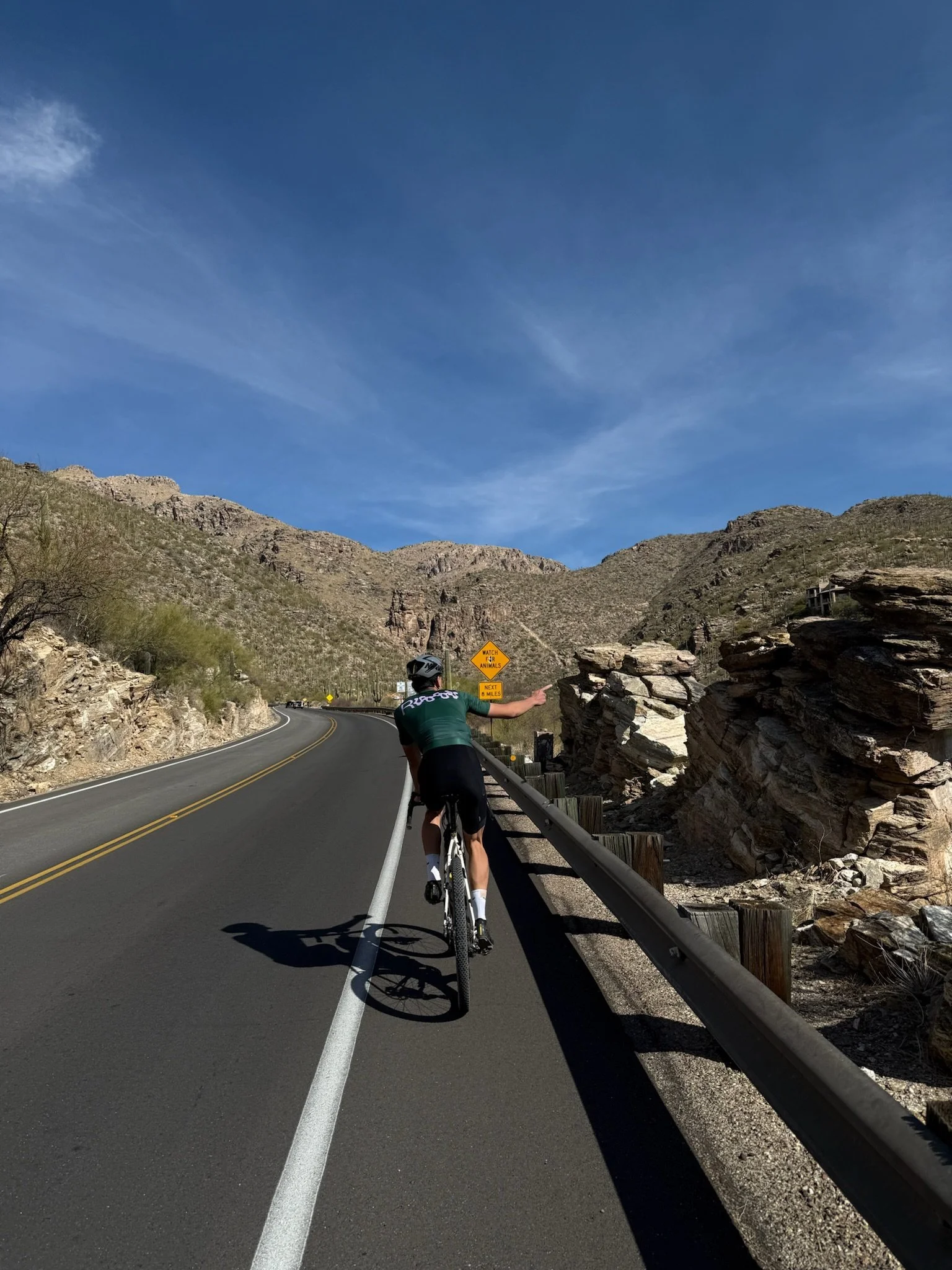
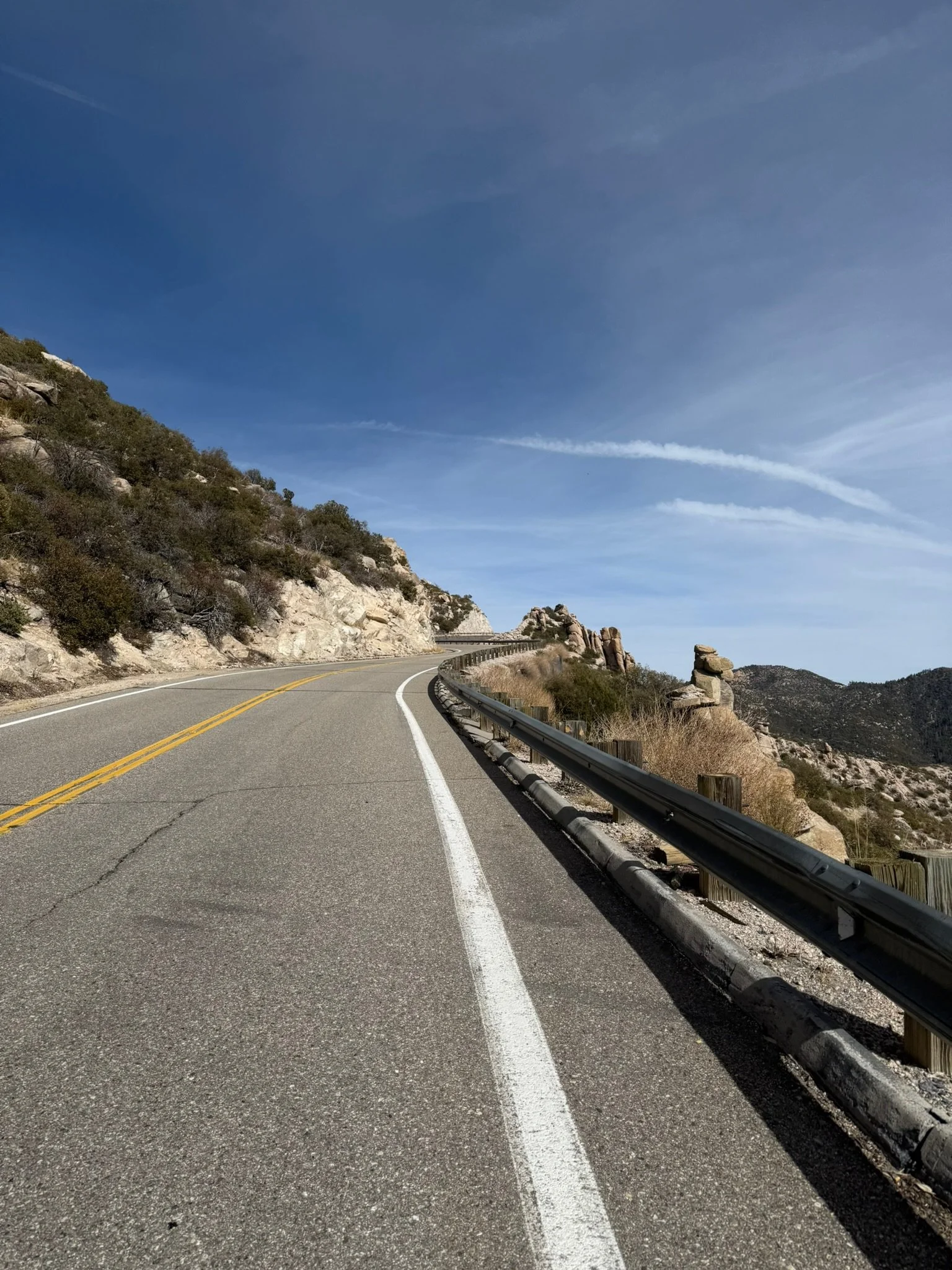
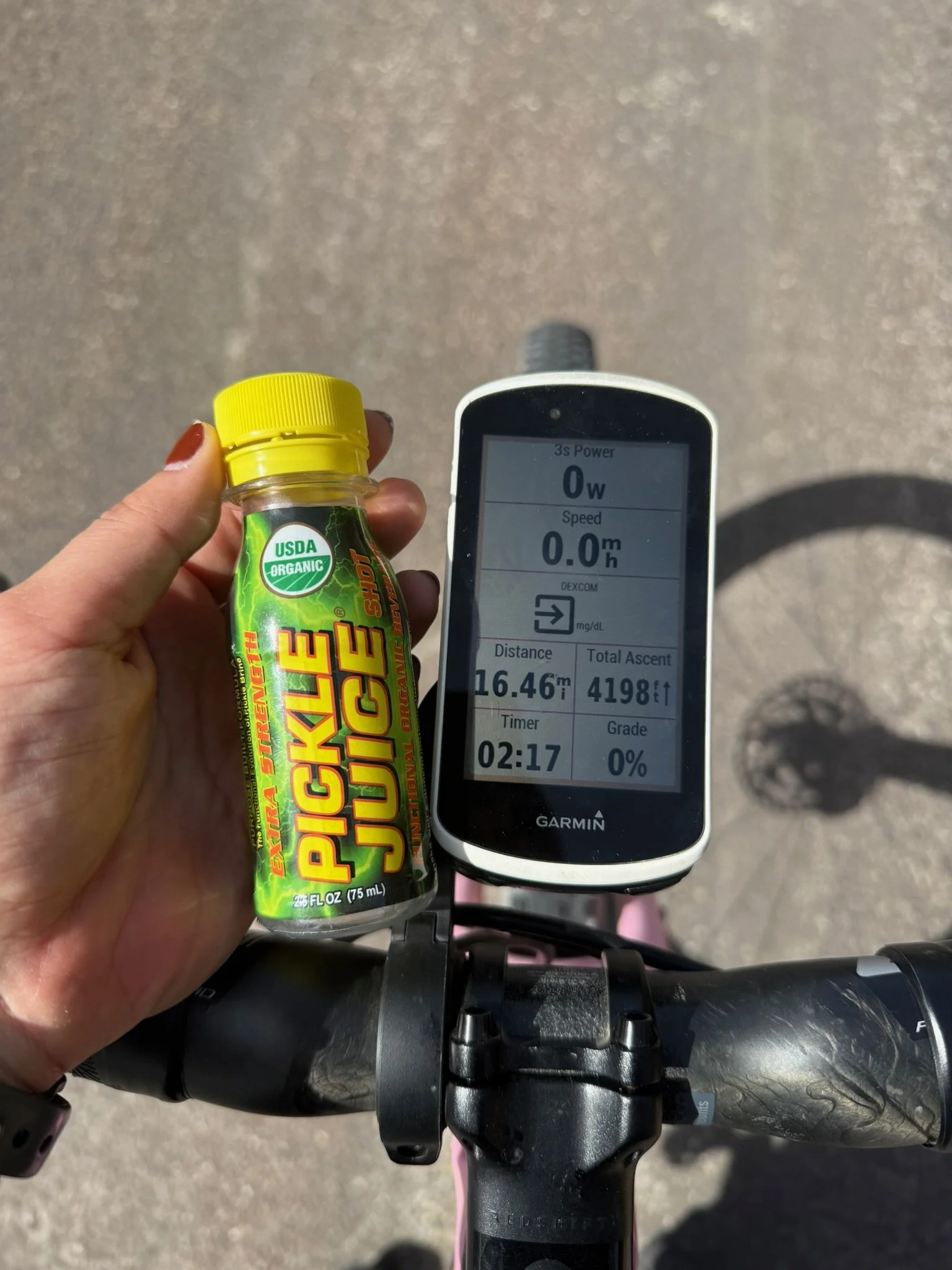
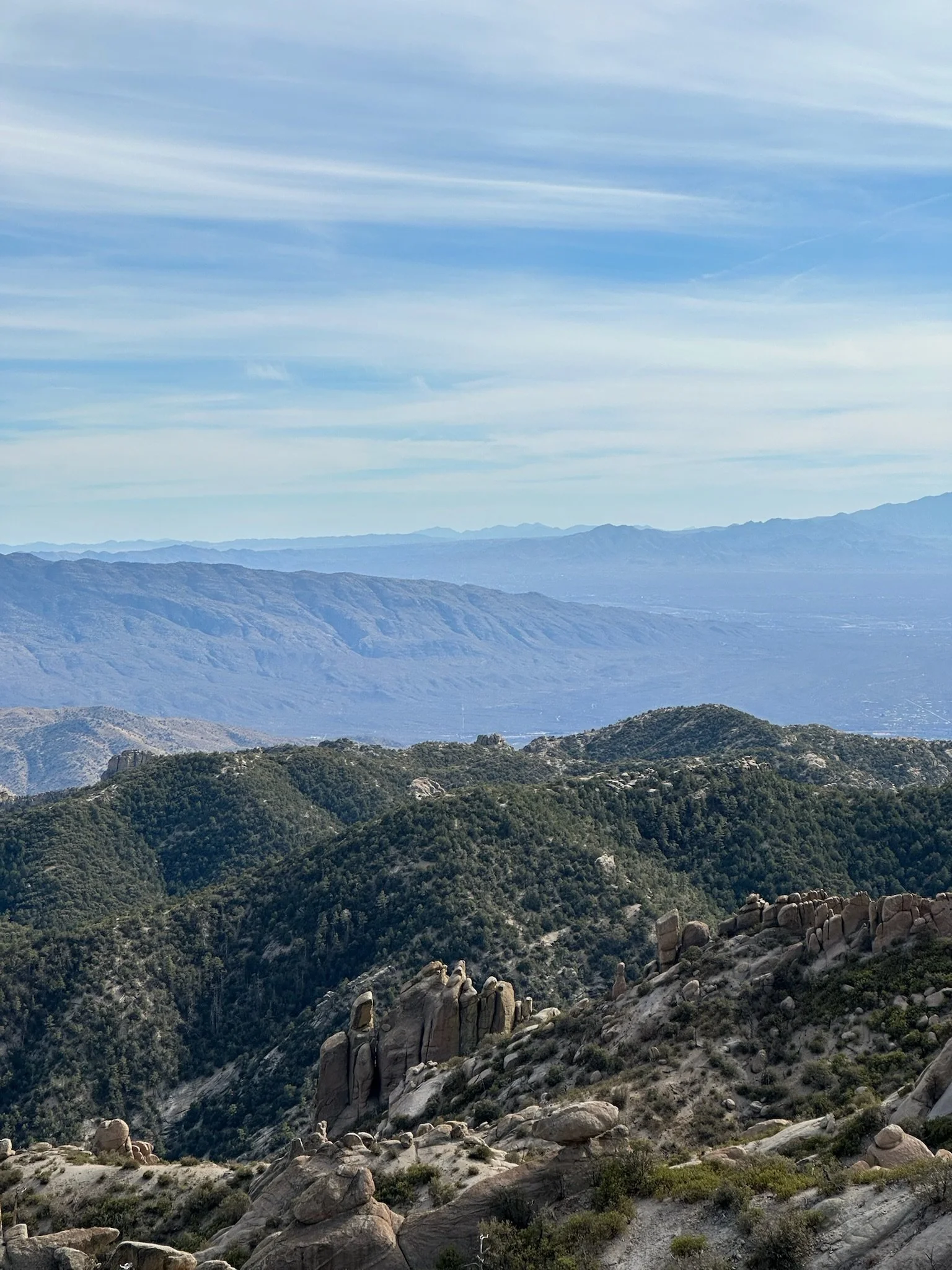
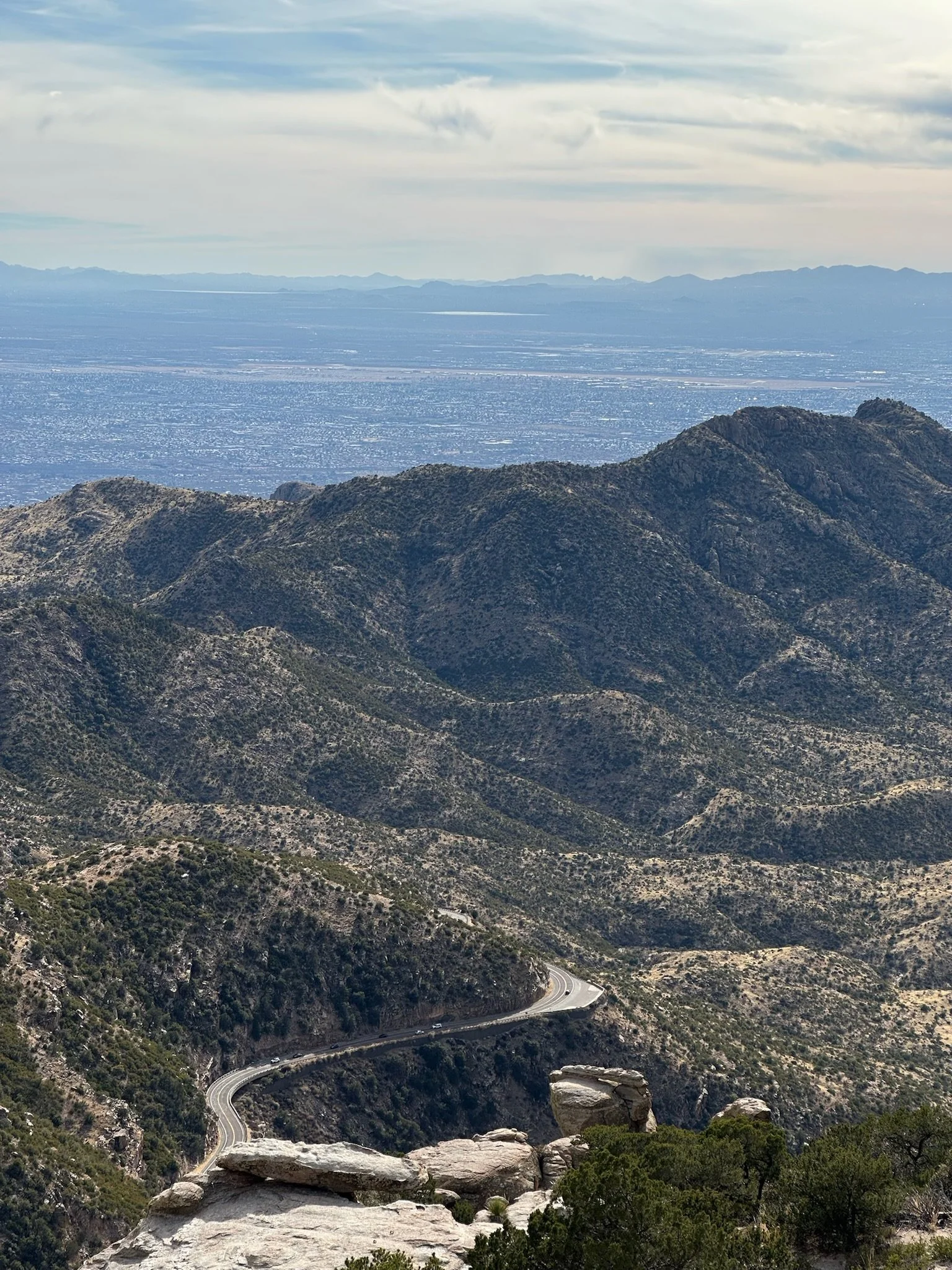
The climb felt spiritual. My head was quiet, my heart was full. Watching my Garmin tick past 4,000 feet, I felt resolved. Passing 5,000 feet, the entire week with its lessons and accomplishments came into focus. I felt reassured that I would never again have to shy away from a ride because of diabetes.
On the way up, I passed cyclists descending at 40+ mph on the other side of the road who still took the time to yell, “great job!” and “you got this!” On the way down, drivers honked and waved in encouragement. And while they didn’t know the accomplishment or realization I was quietly celebrating, my joy felt so peaceful yet so loud that it seemed, to me, like everyone was in on it.
My week in Arizona set me up for the gravel season back in Washington in ways I couldn’t have imagined. I rode routes and saw views that summer I’d only ever daydreamed about, and the limits I’d built around my gravel ambitions because of diabetes began to soften. Diabetes management didn’t suddenly become easy and being diabetic didn’t stop being a hurdle, but unpredictable obstacles no longer felt like unforgivable mistakes or personal failures. They became part of the process, and every small success something to build on.
Racing has introduced its own emotional and physical challenges—especially learning how to exist in competitive spaces as a diabetic alongside non-diabetic athletes—and I still have so much to learn. But I’m learning now with curiosity instead of fear, and with a steady confidence that I can take care of myself out there. No matter the terrain, the blood sugar swings, or the unknowns, I trust that I’ll always get myself back to the car.